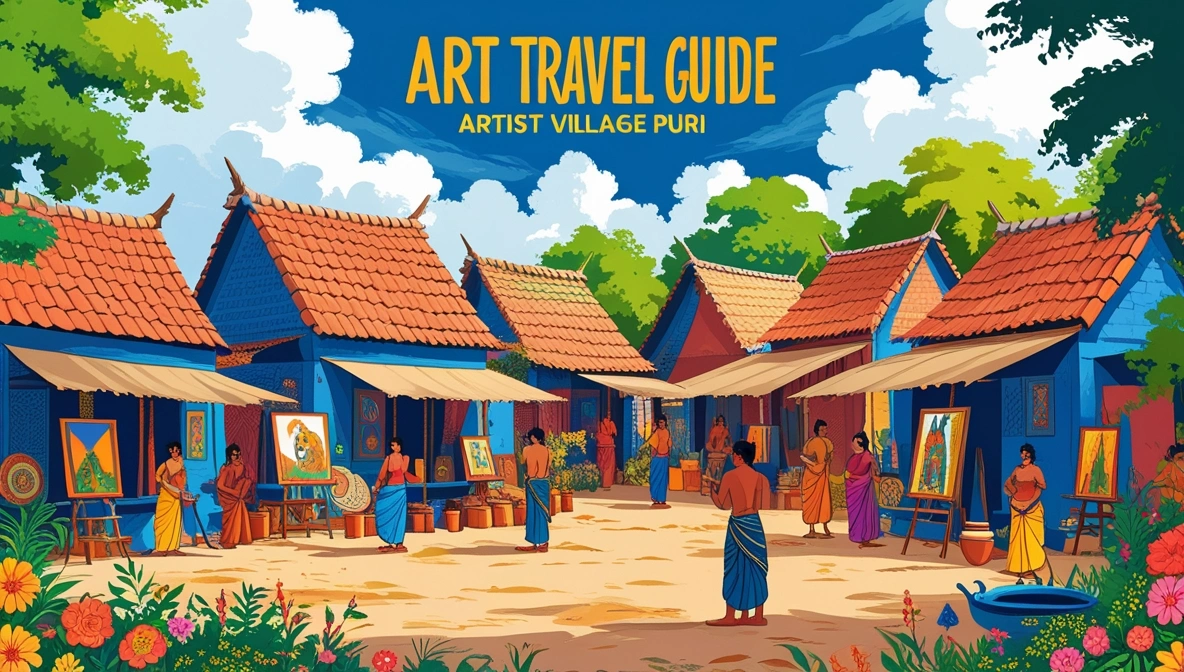
A trip to raghurajpur artist village is a fascinating approach to discover what it is that sets Odisha apart from other states. It is imperative that you pay a visit to this traditional crafts town located in the Puri area if you have a passion for all things historical and handcrafted.
The lovely village of Raghurajpur is located just a short distance away from Puri, which is a well-known beach and pilgrimage town in the state of Odisha. When you arrive, you will be met by clean rows of houses that have murals on the walls above them. Before you even make an inquiry, you will already be aware that you have reached a hamlet that is a haven for artists, where dwellings serve as both places to stay and workshops.
Do you know anything about the popular Pattachitra art form?
Truly, it hails from this town. Raghurajpur has a rich cultural history that is most recognized for the Pattachitra art form, a fabric painting tradition. Is it the exclusive form of artistic expression in this region? No. Stone carving, making wooden toys, and engraving palm leaves are just a few of the many traditional arts practiced in the town.
There are currently artists residing in the area that are engaged in a variety of traditional arts. The late Jagannath Mohapatra, who lived here and received an award from the President of India in 1965, was a major reason for the place’s reputation as a protector of Odisha’s ancient pattachitra art.
Lord Jagannath, the deity of Puri, and his siblings go into hiding two weeks prior to the Rathayatra festival, when the temple is closed. At this period, artists selling miniature paintings of the deities (chitrakar) would attract pilgrims. The fascinating thing about the Pattachitra art form is that it has been passed down from generation to generation. For thousands of years, the locals here have done an incredible job preserving this art form.
You might not be aware that the artists of Raghurajpur have been able to delve deeper into other traditional art forms since the village was designated as a “heritage village” in 2000 by the Indian National Trust for Art and Cultural Heritage (INTACH). The fact that Pattachitra is so famous and has been preserved makes perfect sense.
An in-depth explanation of the Patachitra of raghurajpur artist village
It is said that the pattachitra of Odisha has been passed down from one generation to another since the 12th century. To create a painting, seven layers of cloth are cut into discs and appropriately reinforced. Traditional Raghurajpur artisans still lean toward organic colors, even though synthetic colors have mostly replaced natural plant and mineral dyes. Ganjifa and Odisha Dashavatar are also playing cards that fall within the pattachitra genre. Museums across the globe showcase these unique artworks, especially the playing cards.
The raghurajpur artist community is also well-known for its paint-on-leaf work. The artist creates intricate black line designs on interlocking palm leaf strips, sometimes embellished with colored daubs. The story is woven into each drawing, much like a tapestry. Along with their usual paintings, the artists also make souvenirs such as painted bookmarks in the shape of palm leaves.
Artisans may be seen making a wide variety of things, including painted pattachitra and palm leaves, wooden toys, masks, papier mâché toys, coconut crafts, and more. People of all genders create art. The artists are usually quite welcoming to visitors and happy to talk about the process or background of the work. Actually, many families open their doors to visitors. Customers have the option to buy directly from the artists. Additionally, you have the option to pay extra to have a lesson or lessons with the artists. While touring the art village, you may want to take a moment to remember Guru Kelucharan Mohapatra, a noted Odissi dance exponent who was born in Raghurajpur.
The Top Five Attractions in the Neighborhood
Raghurajpur is well worth a visit, but there are plenty of other interesting sights and sites in Odisha to fill your itinerary as well, like:
- Puri
The Hindu pilgrimage site of Puri, home to the revered Jagannath Temple, is just 14 kilometers away from Raghurajpur. Puri Beach, the city’s bustling marketplaces and streets, and the temple itself are all worth seeing.
- Konark
Raghurajpur and Konark, the “Sun Temple City,” are around 35 kilometers apart. A UNESCO World Heritage Site, the Konark Sun Temple is famous for its stunning architecture. You should also visit Chandrabhaga Beach, which is nearby.
- Chilika Lake
Raghurajpur and Chilika Lake, the biggest coastal lagoon in India, are around 60 kilometers apart. It is a haven for those who enjoy nature and birdwatching. The Nalabana Bird Sanctuary is accessible via lake boat.
- Bhubaneswar
The capital of Odisha state, Bhubaneswar, is located about 60 kilometers away from Raghurajpur. Among its many ancient temples are the world-famous Mukteshwar and Lingaraja. Modern amenities, such as parks and museums, are also present throughout the city.
- Dhauli
Raghurajpur is located around 50 kilometers away from the ancient site of Dhauli, the site of the Kalinga War. The rock decrees and nonviolent symbol of peace, the Shanti Stupa, have brought it fame.
Raghurajpur: An Earlier Art Form Conquers Contemporary Practices
Upon entering the town, you will quickly notice that numerous homes are occupied with traditional crafts. The doors and walls of many Raghurajpur houses feature elaborate patterns. Guests will be informed that these houses practice Pattachitra. What a remarkable thing!
Pattachitra paintings often feature scenes from Hindu mythology and tradition from the area. The paintings of these patterns are created using pigments and colors that are found in nature. Naturally occurring colors are in a league of their own when it comes to uniqueness and beauty. The one-of-a-kind artwork and charming rural charm enchant every tourist.
Which Hotel Should You Choose?
Accommodations in Raghurajpur are unique, yet few.
- Enjoy a relaxing stay in a traditional setting at Heritage Villa Raghurajpur and learn about the local culture at the same time.
- Another option is to participate in a homestay, where you can eat traditional Odia cuisine prepared by locals while learning about their culture.
- If you’d prefer a wider variety of places to stay, you can easily spend the night in nearby Puri and visit Raghurajpur on day trips.
Facilities may not be as advanced as those in cities, so be prepared. Still, the opportunity to see a typical Odia village is a once in a lifetime chance for culture and art lovers.
How to get to this location in the most efficient manner?
Raghurajpur is not a popular tourist destination even though it is only a 10-kilometer drive from Puri. So, to get to work each day, you need book a rideshare or an autorickshaw. Not only are the artists’ families kind and kind, but they truly get it. So, before you sneak into someone’s house or office, make sure you get their permission. Before taking images of people or items on exhibit, it’s a good idea to get their approval. Remember that the value of each work of art is reflected in its price if you’re eager to buy straight from the artists.
- If you prefer to fly, the nearest airport to Raghurajpur is Bhubaneswar’s Biju Patnaik International Airport, which is around 60 miles away.
- For those traveling by rail, the nearest station is the Puri Railway Station, which is around 14 kilometers away from Raghurajpur.
- By bus: Raghurajpur is well-connected to every major city and town in Odisha.
FAQs
Where is Raghurajpur Artist Village located?
Raghurajpur is located in the Indian state of Odisha, near Puri, about 10–14 kilometers from the Jagannath temple site.
Why is Raghurajpur famous?
The village is famous for its Pattachitra paintings, palm leaf carving, traditional crafts and Gotipua dance performances.
What is Pattachitra painting?
PattaChitra is a traditional cloth-based completely depicting fashion from Odisha that presents mythological themes, decorative patterns and herbal colours.
Is Raghurajpur a heritage village?
Yes, Raghurajpur has been elevated as Odisha’s first historical ancient craft village with the help of conservation companies.
What is the best time to visit Raghurajpur?
The best time to visit is from October to March when the weather is good.
How much time is desirable to explore the village?
Most visitors spend 2–3 hours exploring the village, interacting with artisans and buying handicrafts.
Conclusion
Raghurajpur has been a famous tourist spot for people from all over the globe in the last several years. Guests to the hamlet have the opportunity to purchase traditional goods, interact with the craftspeople, and witness the performance of traditional arts. They make these houses their home and studio at the same time. From the divine splendor of the patta painting artwork to the energetic grace of the Gotipua dance, Raghurajpur reflects Odisha’s spirit of discovery in its purest form. Visitors leave not only with souvenirs, but with a deep appreciation for the cultural richness of India, and the determination of the artisans who preserve these traditions to keep them alive.
The rapidly modernizing global Raghurajpur reminds us that the historical past is not something always locked away in the record books — it is, after all, something that can be seen, heard, touched and experienced on a regular basis.
raghurajpur artist village is more than just a village; It is a residential celebration of Indian history and devotional crafts. Each painted wall, carved palm leaf and handmade artwork tells a story that spans centuries. The village stands as a shining example of how traditional societies can adapt to changing contexts and preserve a way of life.