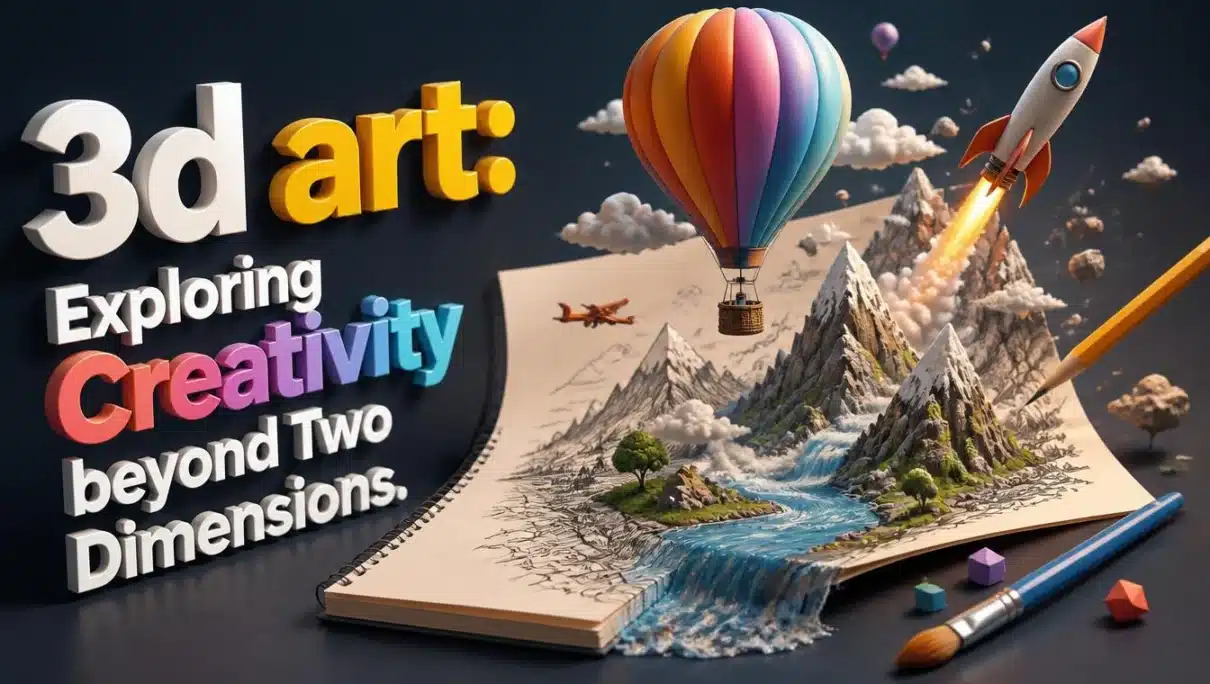
Art has evolved alongside human creativity. From cave paintings to digital drawings, every era has given artists new ways to express their ideas. Today, 3d art combines creativity with technology, allowing artists to create lifelike characters, detailed products, and immersive experiences that go beyond a flat canvas.
If you like animated movies, play video games, look at architectural designs, or use social media, you’ve probably seen impressive 3D art without even realizing it. This art form has transformed many industries, including entertainment, advertising, education, and healthcare.
If you’re curious about what makes 3D art unique or are thinking about learning it, this guide will cover the basics for you.
What is 3d art?
3d art is artwork with three measurable dimensions: height, width, and depth. Unlike traditional 2D drawings on a flat surface, 3D art looks more realistic because it shows volume, perspective, texture, and lighting.
There are two broad categories of 3D artwork:
- Traditional 3D artworks like sculptures and installations
- Digital 3D creations made using specialized computer software
Modern digital 3D art uses modeling, texturing, lighting, animation, and rendering to create objects that resemble real materials or imaginary worlds.
Artists can design almost anything, including:
- Human characters
- Animals
- Buildings
- Vehicles
- Product prototypes
- Furniture
- Landscapes
- Fantasy creatures
- Game environments
Thanks to this flexibility, 3D art is now one of the most versatile art forms.
A Brief History of 3D Art Creativity
Even though digital tools are new, people have been making 3D art for thousands of years. Ancient cultures used stone, bronze, wood, and clay to create sculptures of gods, rulers, and scenes from daily life.
The digital revolution began in the 1960s when researchers experimented with computer graphics. In the 1980s and 1990s, improved computing power enabled detailed digital models for films and television.
The popularity of animated movies introduced millions of people to computer-generated imagery (CGI), while the gaming industry accelerated innovation by demanding increasingly realistic graphics.
Today, new technologies like instant rendering, virtual reality, and artificial intelligence continue to push the limits of digital art.
How Digital 3D Art Is Created
Making digital art involves several steps, and each step adds something important to the final piece.
Concept Development
Every project initiate with an idea. Artists often sketch rough concepts to establish the appearance, mood, proportions, and purpose of the object or scene.
Good planning at the beginning helps you avoid lots of changes later on.
Modeling
Modeling is the process of constructing the object’s shape using polygons, curves, or digital sculpting techniques. Artists carefully define:
- Size
- Structure
- Proportions
- Surface details
- Topology
A well-crafted model lays the foundation for every step that follows, making the creative process smoother and more rewarding.
Texturing
Once the model is complete, textures are applied to simulate realistic materials.
Textures can imitate:
- Metal
- Wood
- Leather
- Fabric
- Skin
- Glass
- Stone
- Plastic
Textures breathe life into simple shapes, transforming them into objects with personality and realism.
Lighting
Lighting shapes the mood and emotion of every artwork. Artists adjust:
- Brightness
- Shadows
- Reflection
- Ambient light
- Color temperature
Masterful lighting can make a scene feel cinematic and lifelike, or infuse it with a style all its own.
Rendering
Rendering converts the completed digital scene into a final image or animation. Modern rendering software handles lighting, shadows, reflections, and textures to create finished images for games, movies, ads, or presentations.
Popular Types of 3D Art
3D art now spans a vibrant array of creative specialties, each blending unique artistic vision with technical expertise.
Character Design
Character artists create people, superheroes, fantasy creatures, robots, and animals for films, games, and advertisements.
Environment Design
Environment artists build entire worlds. Their work may include:
- Cities
- Forests
- Mountains
- Space stations
- Castles
- Historical locations
- Interior spaces
Every object adds depth to the scene’s atmosphere and narrative.
Product Visualization
Companies frequently use 3D visualization before manufacturing products. Designers create accurate digital models of:
- Smartphones
- Cars
- Furniture
- Home appliances
- Fashion accessories
3D models streamline production, saving both time and resources.
Architectural Visualization
Architects rely on realistic renders to help clients understand how buildings will look before construction begins. These visualizations include:
- Exterior views
- Interior rooms
- Landscape design
- Lighting simulations
Clients can see and explore spaces before construction even starts.
Motion Graphics
Many ads, TV intros, and promo videos use animation and 3D graphics to make visuals more engaging.
Essential Skills Every Artist Should Develop
Making great 3D art takes more than just knowing how to use software. Successful artists often develop the following abilities:
- Strong observation skills
- Basic drawing knowledge
- Understanding of perspective
- Color theory
- Composition
- Lighting principles
- Creativity
- Patience
- Problem-solving
- Attention to detail
Technical expertise becomes significantly more valuable when supported by solid artistic fundamentals.
Popular Software Used by Professionals
Today’s artists have access to numerous powerful applications suited to different creative goals.
Some of the most widely used include:
- Blender
- Autodesk Maya
- Autodesk 3ds Max
- Cinema 4D
- ZBrush
- Houdini
- Substance Painter
- Unreal Engine
- Unity
Among these, Blender is especially popular because it offers professional-grade features without a paid license, making it an excellent choice for beginners and independent creators.
In the end, the best software is the one that fits your interests, workflow, and career goals—not just what’s most popular.
Where 3D Art Is Used Today
The influence of 3D art extends far beyond entertainment.
Film and Animation
Animated films rely heavily on detailed models, environments, lighting, and visual effects to create believable worlds that captivate audiences.
Video Games
Game studios use 3D assets for:
- Characters
- Weapons
- Vehicles
- Landscapes
- Buildings
- User interfaces
- Cinematic sequences
Real-time rendering technology has significantly improved visual quality over the past decade.
Advertising and Marketing
Brands increasingly showcase products with high-quality renders rather than paying for costly photo shoots.
Healthcare
Medical professionals use three-dimensional models for:
- Anatomy education
- Surgical planning
- Medical simulations
- Patient communication
Visual learning often improves understanding of complex medical concepts.
Education
Teachers and online platforms use interactive 3D models to make science, engineering, architecture, and history lessons more interesting.
Manufacturing
Engineers test digital prototypes before making real ones, which saves materials and lowers costs.
How Beginners Can Start Learning
Learning 3D design may seem intimidating initially, but a structured approach makes the journey much easier.
Start by understanding the basics of modeling rather than trying to create complex cinematic scenes immediately.
Focus on simple objects like:
- Cups
- Tables
- Chairs
- Bottles
- Lamps
As your confidence grows, gradually move toward characters, environments, and animations.
Helpful learning habits include:
- Practice consistently instead of occasionally.
- Recreate everyday household objects.
- Observe real-world lighting and materials.
- Learn keyboard shortcuts to improve efficiency.
- Study the work of experienced artists for inspiration rather than imitation.
- Build a portfolio that showcases your progress over time.
Remember that improvement comes through regular practice rather than rushing to complete complicated projects.
Career Opportunities in the Creative Industry
As digital content continues to grow, skilled artists are finding opportunities across multiple industries.
Common career paths include:
- 3D Artist
- Character Artist
- Environment Artist
- Texture Artist
- Lighting Artist
- Product Visualizer
- Architectural Visualizer
- Game Artist
- Animation Artist
- Visual Effects (VFX) Artist
- Motion Graphics Designer
- Freelance Digital Artist
Many professionals also sell digital assets, teach online courses, or create social media content, opening additional income streams beyond traditional employment.
Conclusion
3d arthas transformed the creative landscape by combining artistic imagination with modern technology. From animated films and immersive video games to architectural visualization and product design, its applications continue to expand across countless industries.
Though mastering 3d art takes patience and effort, the rewards are just as great. Each project deepens your grasp of form, lighting, composition, and storytelling. Whether you seek personal creativity, freelance opportunities, or a thriving creative career, building strong fundamentals and practicing regularly will unlock the full magic of this captivating medium. As technology evolves, 3D art will continue to be one of the most thrilling and vital outlets for creativity, offering artists limitless ways to break free from the boundaries of flat art.