Although drawing’s fundamentals are simple to learn, developing your talent takes practice and dedication. We will try to break down the basics of sketching in this essay, but even the best artists have bad days. Understanding light and shade, reducing shapes, and drawing outlines are the fundamentals of simple drawings. Accurate proportions and perspective can be realized through the practice of dissecting complex structures and then reassembling them.
The ability to draw may appear to be reserved for the most gifted individuals. However, anybody may master the talent. Improving one’s drawing abilities requires practice, just like learning a new language or an instrument. The most important things are to start small, concentrate on getting the hang of things, and build up your confidence little by little.
In a world where devices control our lives, drawing offers a meditative and introspective pastime. It lets you go at your own speed and discover the arena however you like. Whether you aspire to create photorealistic illustrations or you just want to pass the time in meetings by doodling, picking up some fundamental sketching skills could spark an enduring creative passion.
The Importance of Artistic Drawings!
The ability to sketch is fundamental in many creative professions. Layout and structure planning is typically the initial step in creating a painting. While conceptualizing their three-dimensional creations, many sculptors begin with drawings. To make their vision a reality, architects depend substantially on technical and architectural drawings.
No creative talent is necessary for many to benefit from drawing. Its visual nature facilitates the expression of ideas, the generation of new ones, and the resolution of problems. As a means of contemplation and self-expression, simple drawing can be a restorative practice. People of all ages are inspired to think creatively and imaginatively, which cultivates an appreciation for the visual arts.
The Significance of Being Familiar with the Basic Forms
In order to see past your familiarity and into the unknown, one way to sketch is to simplify complex objects into their most basic forms. Before starting a project, make sure you have everything you need, including the necessary tools and materials. The best approach to ease into drawing and begin writing down ideas is with a warm up. Discovering the pen’s full potential requires trying out various mark-making techniques.
Now is the time to get out your go-to writing implement and get scribbling. There is a vast array of line work styles. Trying with different sized and shaped strokes on your drawing tool will yield a wide variety of results, including scribbles, doodles, dots, stipples, hatching, and more. Not to mention that you can experiment with different pressures to find the one that suits you best. Enjoy yourself; if you let yourself grow bored or annoyed, you won’t persist with practice.
Why it’s Important to Learn How to Draw Simple Shapes
The initial stage in acquiring drawing skills is to become proficient in basic shapes. It could be intimidating to take careful notes on your immediate environment if you aren’t accustomed to seeing things from other perspectives.
- Recognizing the bigger shapes is the first step; splitting them up is the second; and finally, doing it all over again is the third. Near the end, you’ll see the small print.
- Make sure the bigger shapes at the top of your drawing are balanced and proportional by moving and changing them.
- These lines serve as the foundation upon which the remainder of the product is built. It is much easier to add detail to a solid foundation if you pay attention to proportions when you’re starting.
- It’s a dreary, tedious, and stressful affair to fix alignments and measurements after you’ve already started sketching.
Sharpen Your Art Skills: Get Ready to Shape It Up!
Learning to draw well takes practice and dedication, just like any other skill. For those who are just starting out, it could be helpful to draw simple subjects. Use these easy, low-effort drawing ideas to satisfy your creative side.
Geometric shapes
Shapes may seem too simple if you’re just starting out in the art world. Shapes are great to work with if you’re seeking for a simple subject to draw since they form the basis of every visual art form. You must have good shape drawing abilities before you can go on to more complex and elaborate tasks. If you’re having trouble sketching shapes, try using a variety of sizes until you discover one that works.
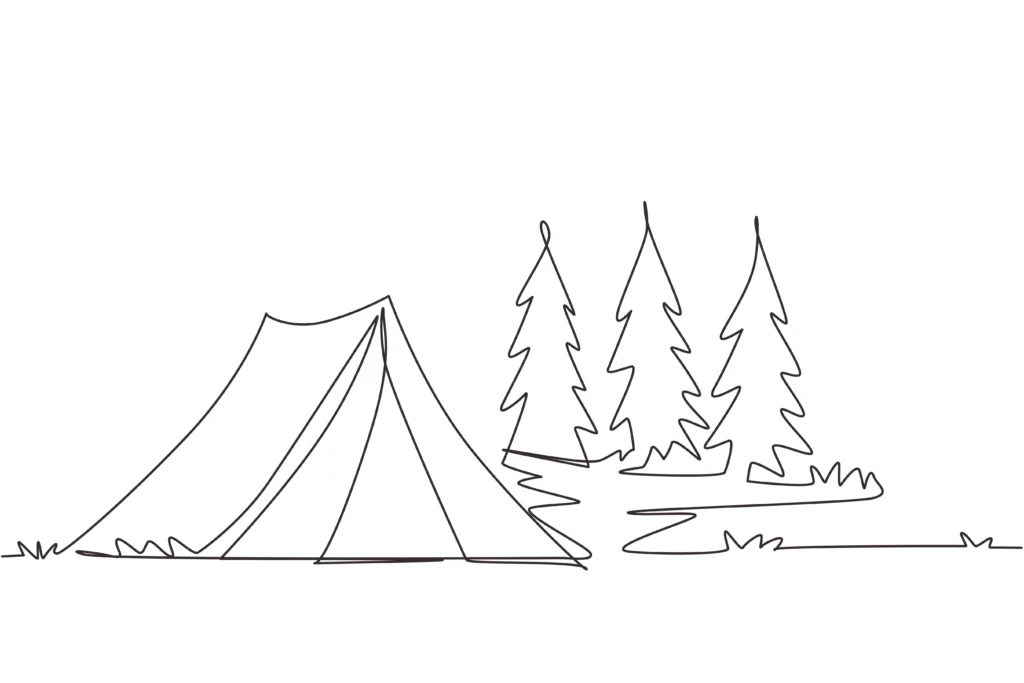
Drawings in a Line
Some viewers may find artwork that is excessively geometrical to be disturbing. Take a good, hard look, though. Since you are already proficient at drawing lines into patterns, you shouldn’t have any problem creating something comparable.
Essential Art Materials for Newcomers
As a beginner, you don’t need a lot of creative tools for basic sketching ideas. On the flip side, every artist needs a few staples in their toolbox.
Pointed-end pencils
An artist who is just starting out or who prefers to err on the side of caution might benefit from using graphite pencils. The ease with which mistakes can be fixed is just another great thing about this tool.
Props for the Arts
For some artists, the final step after sketching with pencil is inking or sketching with pens. Whether you’re into cartooning, drawing, drafting, calligraphy, or any other type of linework, we have the pen for you. Look at the drawing pens that we think are the best.
pencils in a variety of colors
Using colored pencils instead of wooden ones will allow you to achieve far more subtle results when drawing. Furthermore, we have compiled a list of what we believe to be the top-colored pencils.
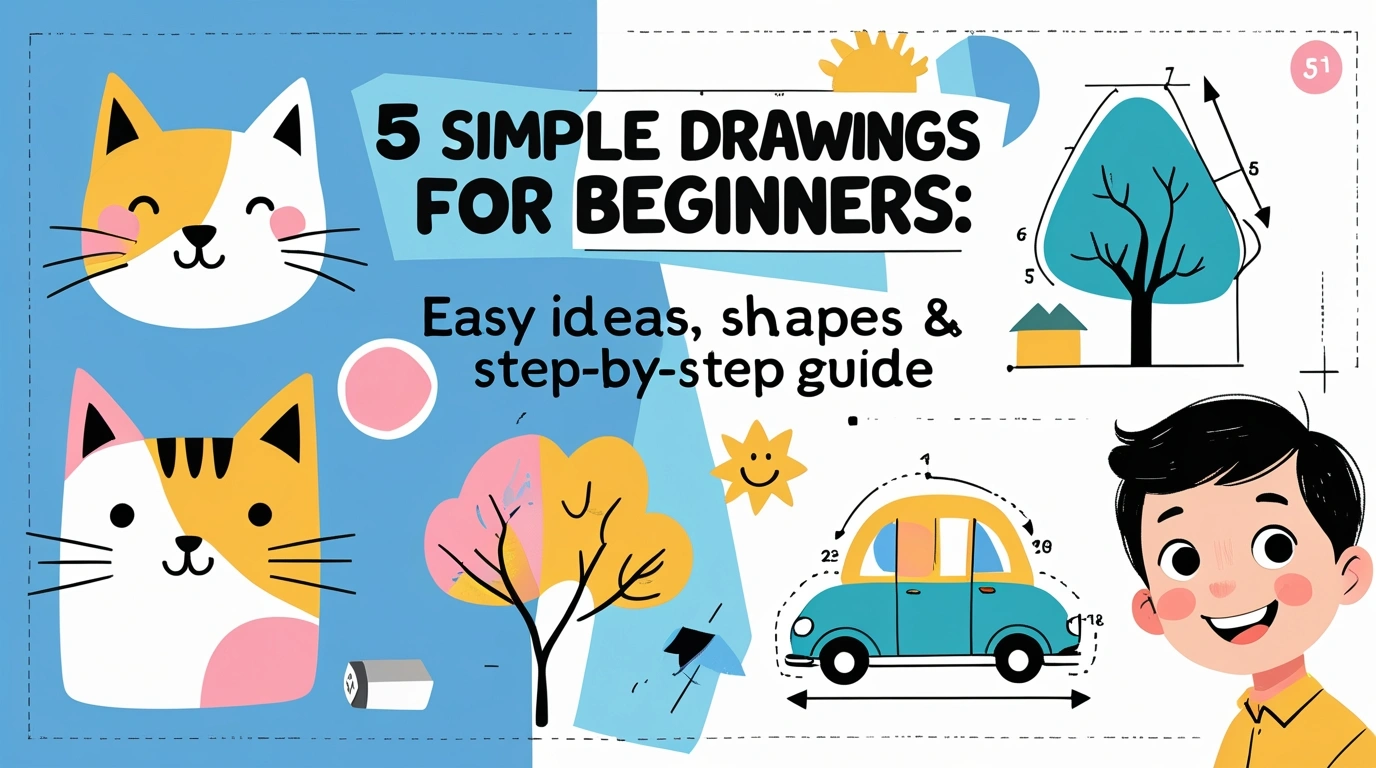
5 simple drawings idea with step-by-step instructions
In order to keep you motivated and inspired as you learn the fundamentals of drawing, here are some simple drawings that are ideal for beginners.
Landscapes
The artist is free to depict any kind of scenery they like in a landscape drawing. Finding it difficult to come up with ideas for your first landscape drawing? The following are some examples of possible landscapes to draw: valleys, hills, woods, beaches, and deserts.
Drawing a landscape is another fantastic idea. Shade, texture, perspective, and detail are all areas where novices can benefit from this. In addition, with their assistance, you can memorialize a significant location in your life.



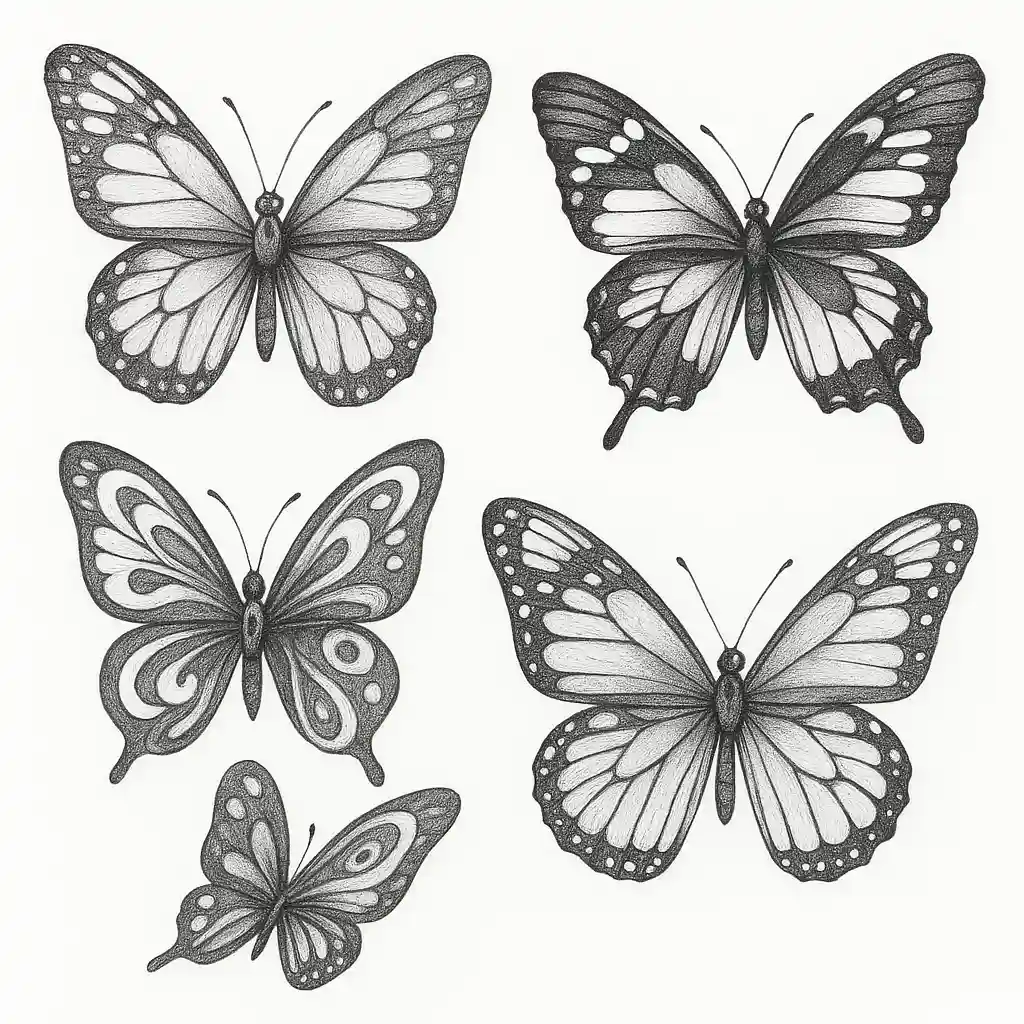
Butterflies
You can let your imagination run wild when drawing a butterfly. The reason behind this is that the artist has complete freedom to create a butterfly with any wing pattern they like. First, sketch up a simple butterfly. Then, add details when you’re happy with them. Painting a butterfly’s wings is another great way to experiment with color. If you’re always pushing yourself to improve, you might find that you experiment more with combining artistic styles. Set those lovely wings free.


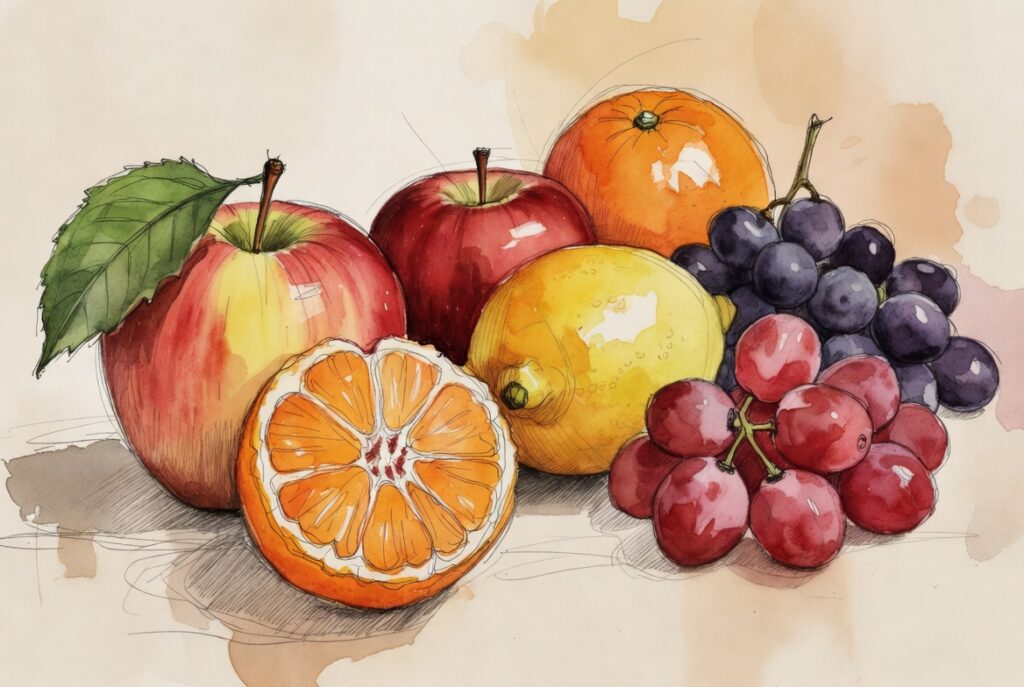
Food
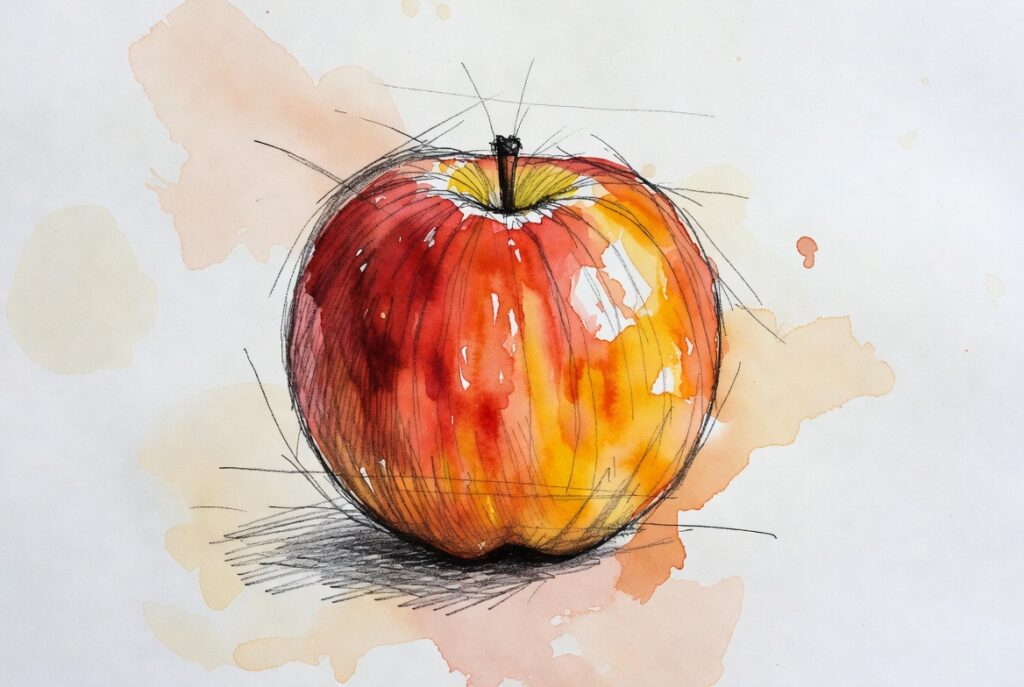
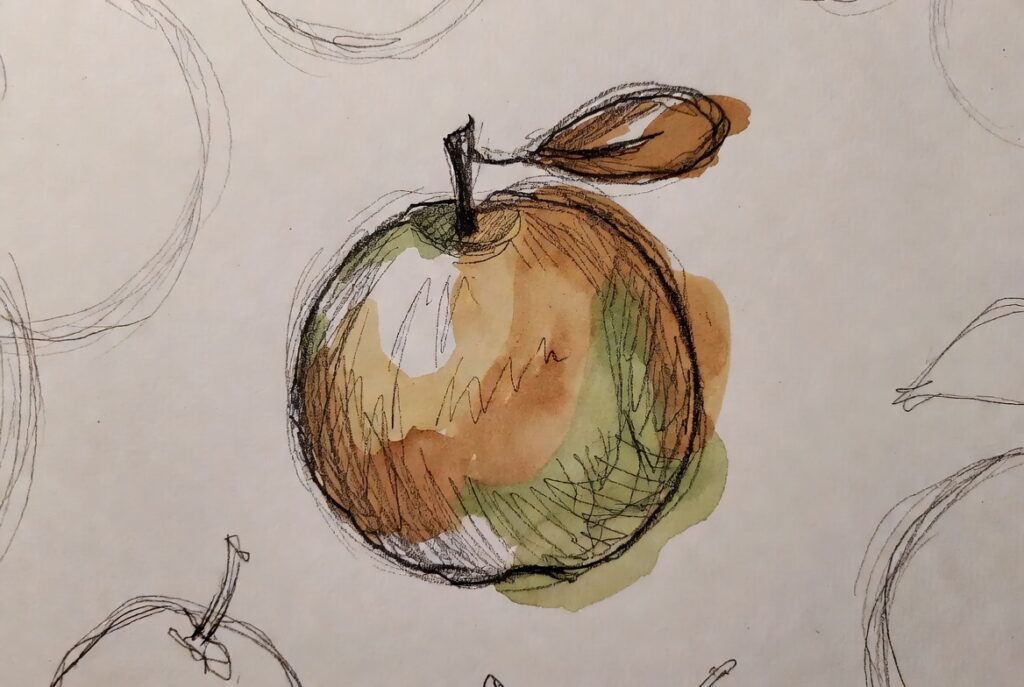
There is an explanation for why fruit plates pop up so often in art. Using fruit as your subject is quite acceptable if you are just beginning to draw. People who are creative tend to love it. Get out your drawing tools, arrange some fruit in a bowl, and start making art.
Birds
There is a vast variety of media and styles represented in bird art. Learning the ins and outs of bird anatomy will make you more versatile in your work with different kinds of birds. If you depict birds in flight or perched on branches, they will be more interesting and useful.




Tree
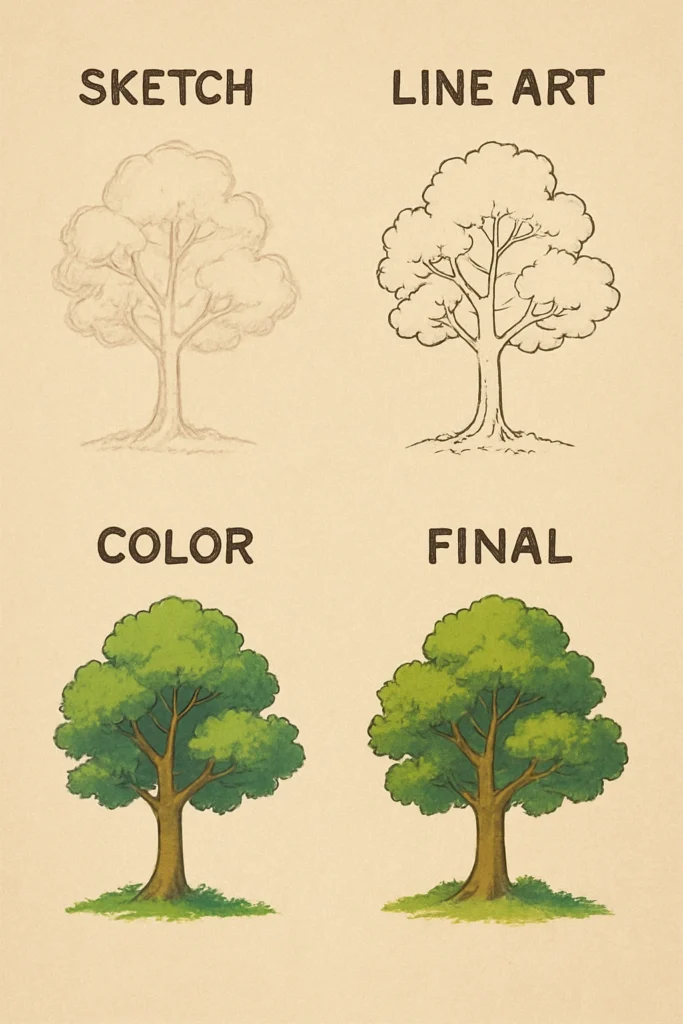
You can choose to focus on drawing a single tree that would be found in a landscape, even if you have previously learned the importance of drawing landscapes. If you want to become an expert at drawing trees, it’s best to practice with both fully leafed and leafless trees. In the future, your drawings will be more substantial and realistic because of this.



Establishing a Foundation: Fundamental Drawing Abilities
Being Able to See Simple Geometric Shapes
What does your gaze reveal when you fixate on an object? We mean, even a casual viewer could see some chaos, right? For that reason, if we want to comprehend everything, we should use simpler formulations. It is simple to see and write down basic geometric forms like rectangles, ovals, and triangles.
Picture yourself right in the middle of a bustling city. There is a wide range of building sizes, window styles, and roof pitches to be seen. You keep your focus on the big picture rather than getting mired down in the specifics. Instead of drawing a single figure on a block, it would make far more sense to include multiple buildings. It is necessary to compare the two sets of dwellings after the first set has been marked out. In what ways is it shaped? You can achieve different effects by adjusting the size and position of the blocks once you’ve arranged them appropriately. Once we’ve dissected each shape into its component elements, we divide them once more. You draw that way.
Making use of a soft, pastel color
Make sure the first lines are precise if you want your drawing to stand on its own. Making art is more of a journey of discovery than a set of innate abilities. Artists with skill can see failures as learning experiences. Yes, even the most seasoned performers have done it all.
Draw with a light hand and don’t push down too firmly while using a dark pencil. If you want more command over your grasp and touch, draw with the paper held vertically. Subjects can be made to move by maintaining lines, and it’s not necessarily essential to erase errors.
Creating Curves and Outlines
Once the basic proportions and forms are established, the following stage is to provide substantial structure by outlining the key features. These phrases would exude self-assurance and be flexible enough to deal with change if the world were ideal. The figure’s exterior contours serve as silhouettes, while the figure’s interior lines provide depth and dimension.
Filling out the basic forms allows you to go back and make changes as you go. In contrast to the peripheral areas, where small mistakes can be easily overlooked, the main center demands pinpoint accuracy. You may create the illusion of depth and three-dimensionality by balancing proportions and drawing attention to key areas. Resolving one shape could necessitate resolving nearby related shapes.
Conclusion
We have chosen some basic objects for your initial attempt at drawing. We will explain everything in detail so that you can grasp the fundamentals right away. Now that you have this collection of simple drawings for beginners, you don’t have any excuse not to practice your pencil drawing skills. A pencil, some paper, and an understanding of these fundamentals of sketching can be all that’s needed to quickly boost your self-confidence as an artist.
Using a pencil, understanding light and shade, and simplifying complicated concepts into basic shapes are all skills you’ve picked up thus far in this course on easy sketching. Acquiring proficiency in simple drawings is similar to becoming an expert in any other field. Regardless of one’s natural artistic ability, anyone can always work to improve their skills and become a more skilled artist. Anyone hoping to make a living as an artist or designer needs this competence.