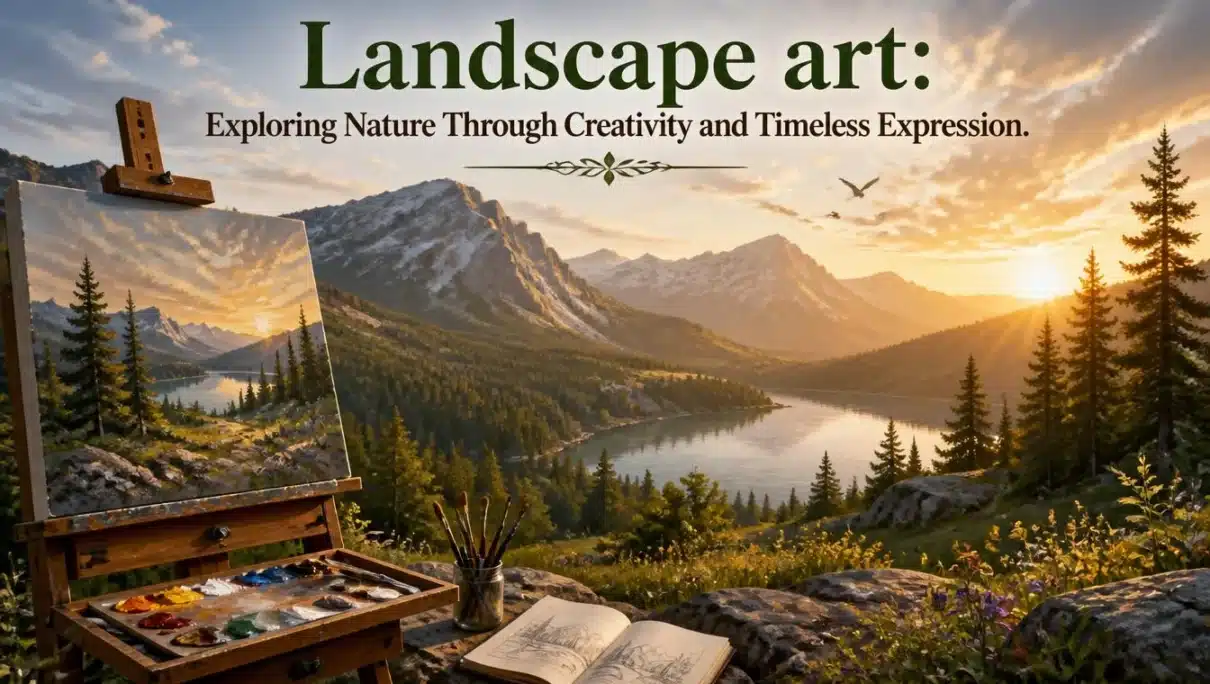
For centuries, landscape art has captivated hearts as one of the most beloved artistic forms. Artists have found inspiration in nature’s wonders, from towering mountains and tranquil lakes to radiant sunsets and shadowy forests. Unlike portraits or abstract pieces, landscapes invite viewers to step into the artist’s world and see nature’s beauty through fresh eyes.
Today, landscape art is more popular than ever. Whether displayed in galleries, shared on social media, or created as a relaxing hobby, these artworks connect people with nature. Traditional paintings, watercolor scenes, digital illustrations, and mixed-media creations all show that landscapes remain a timeless subject for artists of every skill level.
In this guide, you’ll explore the rich history of landscape art, discover its many styles, learn essential techniques and tools, and gather practical tips to create your own breathtaking scenes inspired by nature.
The Evolution of landscape art
Nature has graced artwork since the dawn of civilization, though early artists often used landscapes as backdrops. During the Renaissance, nature began to take center stage as artists embraced realistic lighting, perspective, and the subtle moods of the outdoors.
By the 17th and 18th centuries, landscape painting had blossomed into a celebrated genre. Artists captured wild coastlines, gentle hills, serene rivers, and the ever-shifting moods of the seasons with remarkable detail.
The 19th century sparked a wave of innovation in Impressionism, where artists traded strict detail for shimmering light, lively movement, and bold color. Today, the genre evolves as artists blend realism with modern styles, digital tools, and their own unique stories.
Why Nature Keeps Inspiring Artists
Natural scenery has a soothing magic that speaks to everyone. Mountains, rivers, forests, deserts, and oceans unfold in endless combinations of color, texture, and mood, each offering something new to discover.
Artists often choose landscapes because they allow them to:
- Express emotional experiences through nature
- Practice perspective and composition
- Explore changing light conditions.
- Capture seasonal beauty
- Develop observation skills
- Experiment with color harmony
Unlike other artistic subjects, landscapes are in constant motion. Each sunrise, rainfall, snowfall, or sunset creates a new scene waiting to be interpreted.
Popular Styles You Can Explore
landscape art bursts with diversity, offering a world of creative freedom for every artist to explore.
Realism
Realistic landscapes focus on accurately portraying natural environments. Artists carefully observe lighting, textures, and proportions to recreate scenes as faithfully as possible.
Impressionism
Rather than emphasizing fine detail, Impressionist landscapes capture fleeting moments through visible brushstrokes, vibrant colors, and natural light.
Watercolor Landscapes
Watercolor paintings create soft transitions, transparent layers, and atmospheric depth, making them ideal for skies, rivers, and misty mountains.
Digital Landscapes
Using tablets and creative software, digital artists produce everything from fantasy forests to highly detailed environmental illustrations.
Abstract Landscapes
Abstract interpretations simplify shapes, exaggerate colors, and prioritize mood over realism, allowing artists to express personal emotions through natural forms.
Essential Elements of a Beautiful Composition
A striking landscape is more than trees or mountains; it’s built on thoughtful composition that brings the scene to life.
Some important elements include:
- Foreground: Increases depth and draws viewers into the scene.
- Middle ground: Connects the foreground with distant elements.
- Background: Usually contains mountains, skies, or distant forests.
- Focal point: A tree, cabin, waterfall, or pathway creates visual interest.
- Leading lines: Rivers, roads, or fences naturally lead the viewer’s eye.
- Balance: Proper placement of visual elements keeps the artwork from feeling crowded or empty.
A well-crafted composition can turn an ordinary landscape into a visual story that draws viewers in and sparks their imagination.
Choosing the Right Color Palette
Nature’s palette shifts with the seasons, offering a dazzling array of color combinations year-round.
Some popular palettes include:
- Warm autumn oranges, reds, and golden yellows
- Fresh spring greens with soft pink blossoms
- Bright summer blues and lush vegetation
- Cool winter whites, grays, and icy blues
- Dramatic sunset purples and flaming oranges
- Earthy browns with deep forest greens
By studying how colors interact in nature, artists can craft scenes that feel both authentic and emotionally rich.
Materials Every Beginner Should Consider
You don’t need fancy supplies to begin—just a handful of quality basics can set you on your creative journey.
Recommended essentials include:
- Sketchbook
- Graphite pencils
- Acrylic or watercolor paints
- Canvas or watercolor paper
- Variety of paintbrushes
- Palette
- Eraser
- Masking tape
- Water container
- Palette knife (optional)
Digital artists can begin with a drawing tablet and creative software that supports painting brushes and layering.
Techniques That Bring Natural Scenes to Life
Learning a few essential techniques can breathe new life into your landscapes and elevate your art.
Layering
Building multiple layers creates depth, especially when painting forests, mountains, and skies.
Atmospheric Perspective
Objects farther away appear lighter, cooler, and less detailed. This simple principle creates convincing distance.
Dry Brush
A dry brush adds rough texture to rocks, tree bark, and grassy fields.
Wet-on-Wet
Common in watercolor painting, this technique produces soft clouds, reflections, and gentle skies.
Glazing
Applying thin, transparent layers enhances color richness without obscuring earlier details.
Blending
Smooth blending helps create realistic skies, sunsets, water reflections, and distant hills.
Common Mistakes Beginners Should Avoid
Every artist improves through practice, but avoiding these mistakes speeds up progress.
- Using only one shade of green for vegetation
- Ignoring the direction of sunlight
- Placing every object with equal detail
- Making distant objects too dark
- Overworking the sky
- Forgetting foreground elements
- Skipping preliminary sketches
- Using photographs lacking personal interpretation
Studying real outdoor environments often provides more valuable learning than depending solely on reference images.
Finding Inspiration Beyond the Canvas
Inspiration for your next masterpiece can spring up anywhere, often when you least expect it. Try exploring:
- National parks
- Botanical gardens
- Countryside villages
- Coastal shorelines
- Mountain hiking trails
- Wildlife photography
- Seasonal travel
- Local parks at different times of day
Carrying a pocket sketchbook on your adventures lets you capture fleeting ideas before they fade.
The Rise of Digital Creativity
Technology has opened endless new horizons for landscape artists. With digital painting, you can play with light, weather, and composition as much as you like without fear of wasting materials.
Advantages include:
- Unlimited undo options
- Custom brushes
- Easy color adjustments
- Layer-based editing
- Faster workflow
- Convenient sharing online
Many professionals combine traditional sketching with digital finishing to achieve unique results.
Growing as a Landscape Artist
Improvement comes from growth, as an artist comes from keen observation, not from putting brush to canvas more often:
- Sketch outdoors whenever possible.
- Study cloud formations and changing weather.
- Observe how shadows shift throughout the day.
- Experiment with different painting mediums.
- Analyze the work of established landscape artists.
- Keep older artwork to measure your progress.
- Focus on one technique at a time instead of trying everything at once.
Remember that every painting teaches something valuable, even if it doesn’t turn out exactly as planned.
Conclusion
Your journey starts with observation, steady practice, and a spirit of adventure. As your confidence blooms, you’ll find that every sunrise, silent forest, rushing river, or towering mountain can inspire a story only you can tell. With patience and interest, landscape painting transforms from a simple hobby into a powerful way to connect with nature and grow as an artist.
landscape art continues to inspire artists because it celebrates the beauty, diversity, and emotion found in the natural world. Whether you enjoy detailed realism, expressive watercolor, vibrant acrylics, or modern digital painting, landscapes offer endless opportunities for imagination and individual expression.
Frequently Asked Questions
What is landscape art?
Landscape art is a genre that focuses on depicting natural scenery such as mountains, forests, rivers, oceans, valleys, and skies using various artistic mediums.
Which medium is best for beginners?
Acrylic paints are frequently recommended for beginners because they dry quickly, are easy to use, and allow mistakes to be painted over. Watercolors are also popular for those who enjoy softer, more transparent effects.
How can I improve my landscape paintings?
Practice observing real nature, learn perspective, study lighting, experiment with color palettes, and paint regularly. Ongoing practice and careful observation are the keys to creating more realistic and expressive landscapes.