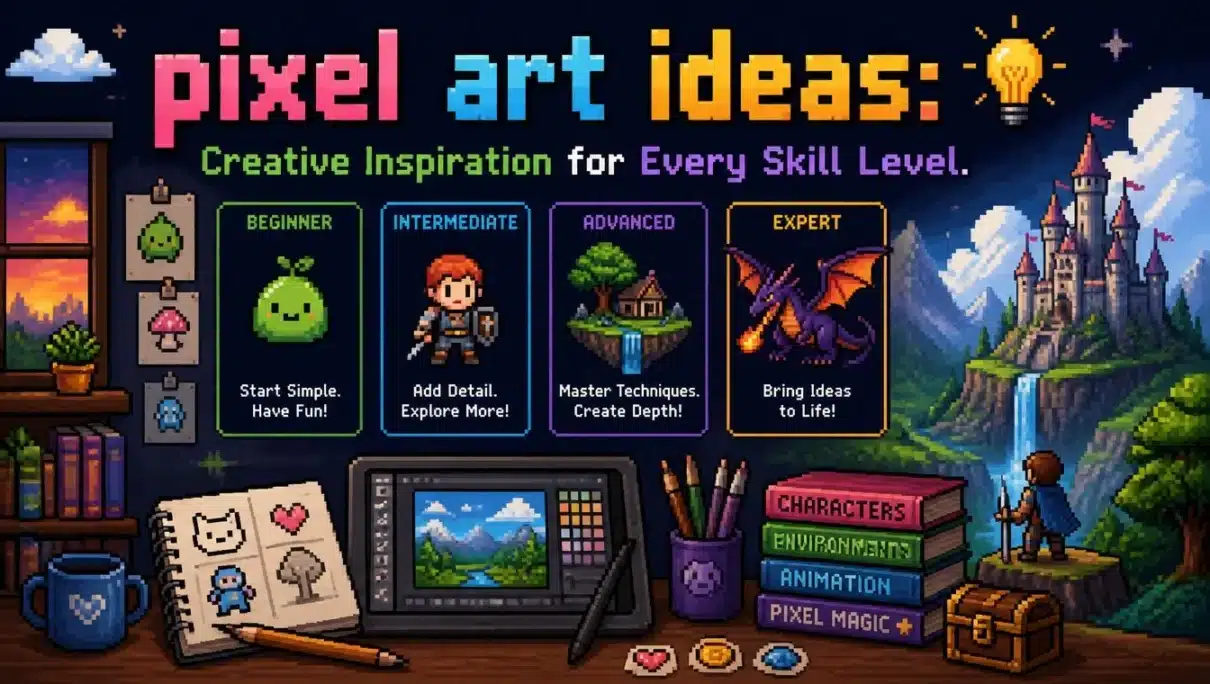
pixel art ideas still inspire artists, gamers, designers, and hobbyists who appreciate creativity built one square at a time. Despite the rise of ultra-realistic digital illustrations, pixel art has maintained its popularity because of its nostalgic appeal, simple tools, and limitless design possibilities.
Whether you’re new to pixel art or looking for new ideas after many projects, finding the right concept can really help. Pixel art is all about turning small grids into expressive characters, detailed landscapes, fun icons, and creative scenes.
In this guide, you’ll discover creative pixel art ideas for every experience level, learn how to develop your artistic style, and explore useful tips that can help you make visually striking designs.
Why Pixel Art Remains Popular?
Pixel art began in the early days of video games, when artists had to work with very few pixels due to hardware limitations. What started as a technical challenge has grown into a respected art form loved by indie game makers, illustrators, and digital artists.
Today, pixel art is widely used in:
- Indie game development
- Mobile games
- Animated GIFs
- Social media artwork
- Stickers and emojis
- NFT collections
- Digital wallpapers
- Printable designs
- Merchandise
- Website graphics
The simple style of pixel art encourages creativity and makes every pixel important.
Beginner-Friendly pixel art ideas
If you’re new to pixel art, starting with simple subjects helps you learn about color, symmetry, and shading without feeling overwhelmed. Some beginner projects include:
- Small hearts
- Smiling faces
- Stars
- Clouds
- Flowers
- Mushrooms
- Trees
- Fruits
- Cats
- Dogs
- Tiny birds
- Coffee cups
These simple drawings use just a few colors, so they’re great for practicing clean outlines and basic shading.
Don’t worry about making things perfect. Focus on being consistent, since each finished project helps you get better at placing pixels.
Character Design Concepts
Creating your own characters is one of the most fun parts of pixel art. These characters often become the stars of games, comics, or animations. Consider designing:
- Fantasy warriors
- Friendly wizards
- Space explorers
- Pirates
- Ninjas
- Medieval knights
- Cyberpunk heroes
- Robots
- Cute monsters
- Magical creatures
Try out different hairstyles, clothes, facial expressions, and accessories. Just a few pixel changes can really change a character’s personality.
As you get more confident, try making different poses and animation frames to bring your characters to life.
From Forests to Beaches: Nature-Inspired Designs
Nature is a great source of inspiration, since each season brings new colors, textures, and scenes to explore. Some creative ideas include:
- Forest trails
- Waterfalls
- Mountain ranges
- Lakes
- Cherry blossom trees
- Autumn leaves
- Snow-covered cabins
- Desert landscapes
- Tropical beaches
- Sunsets
- Rainy city parks
- Flower gardens
Natural environments also provide excellent opportunities to practice gradients, shadows, reflections, and atmospheric lighting.
Adding animals like foxes, birds, butterflies, or deer can make your scenes feel more lively and real.
Pixel Art Ideas for Gaming Enthusiasts
Many artists start with pixel art because they want to make video games. Even if you don’t know how to code, you can still practice designing game assets.
Popular gaming assets include:
- Treasure chests
- Coins
- Health potions
- Weapons
- Shields
- Magic spells
- Dungeon tiles
- Castle walls
- Trees
- NPC characters
- Inventory icons
- User interface buttons
Making individual assets helps you maintain consistency in size and style, which is important for game design. Eventually, you can merge these elements into complete game environments.
Seasonal and Holiday Projects
Holiday-themed art gives you new ideas year-round and lets you try different color palettes. Ideas for every season include:
- Spring
- Blooming flowers
- Butterflies
- Rabbits
- Rainbows
- Summer
- Ice cream
- Palm trees
- Beach umbrellas
- Seashells
- Autumn
- Pumpkins
- Falling leaves
- Acorns
- Cozy cabins
- Winter
- Snowmen
- Mittens
- Pine trees
- Snowflakes
- Hot chocolate
Holiday-specific artwork also makes excellent digital greeting cards and printable decorations.
Transforming Everyday Objects into Charming Digital Creations
Not every piece has to be dramatic or complicated. Everyday objects can become cute pixel art with fun faces and bright colors.
Examples include:
- Books
- Keyboards
- Cameras
- Plants
- Alarm clocks
- Tea kettles
- Bread slices
- Donuts
- Milk cartons
- Backpacks
- Candles
- Pencils
These designs work well as stickers, planner decorations, wallpapers, or social media posts.
Building Imaginative Fantasy Worlds from Simple Shapes
Fantasy themes let you use your imagination freely and often lead to artwork that really stands out.
Interesting concepts include:
- Floating islands
- Crystal caves
- Dragon eggs
- Magical forests
- Fairy villages
- Ancient temples
- Magic portals
- Floating castles
- Moonlit gardens
- Mystic libraries
Adding glowing effects, magical sparkles, and bold color contrasts can make your fantasy scenes feel even more magical.
Feel free to mix different fantasy elements together to create your own unique world.
Creating Colorful Food Designs That Look Good Enough to Eat
Food remains one of the most popular subjects because bright colors and recognizable shapes translate beautifully into pixel art.
Creative food-themed designs include:
- Burgers
- Pizza slices
- Sushi
- Cupcakes
- Bubble tea
- Cookies
- Pancakes
- Tacos
- Watermelon
- Ramen bowls
- Candy jars
- Birthday cakes
Many artists also make animated versions with blinking eyes or smiling faces to add personality.
These illustrations work well as icons, stickers, or profile pictures.
Also read:
Advanced Pixel Art Ideas
After mastering smaller projects, challenge yourself with larger compositions that require greater attention to detail. Consider creating:
- Futuristic cities
- Medieval villages
- Space stations
- Underwater kingdoms
- Large castles
- Busy marketplaces
- Airships
- Haunted mansions
- Ancient ruins
- Massive forests
These projects often involve perspective, lighting, layered scenery, and complex color transitions. Completing larger scenes builds patience while strengthening your overall artistic skills.
Tips to Improve Your Pixel Art
Getting good at pixel art takes practice, but some habits can help you improve faster.
Keep these principles in mind:
- Work with a limited color palette.
- Zoom in while drawing, but frequently zoom out to check the overall appearance.
- Avoid unnecessary detail in very small artwork.
- Study classic retro games for inspiration.
- Practice shading using only a few tones.
- Keep consistent lighting throughout the design.
- Save different versions of your work before making major changes.
- Create artwork regularly instead of waiting for inspiration.
Making small improvements regularly often leads to the best long-term results.
Common Mistakes to Avoid
Even experienced artists sometimes pick up habits that can lower the quality of their work.
Watch out for these common issues:
- Using too many colors
- Inconsistent light direction
- Jagged outlines
- Overcrowded compositions
- Uneven proportions
- Excessive detailing in tiny sprites
- Ignoring contrast
- Rushing final adjustments
Reviewing your artwork after taking a short break often helps identify mistakes you might otherwise miss.
Finding Your Own Creative Style
Many beginners imitate existing artwork while learning, but developing a unique style should become your long-term goal.
You might discover inspiration in retro arcade games, fantasy novels, animated films, nature photography, architecture, or everyday life. Over time, your preferred color palettes, shading techniques, and character designs will naturally become recognizable.
Trying different themes helps you avoid creative burnout. One week, you might make fantasy creatures, and the next, peaceful landscapes or food art. Each project helps you grow as an artist.
Rather than comparing yourself to experienced artists, focus on improving one piece at a time. Progress in pixel art is frequently measured in tiny refinements that eventually produce remarkable results.
Conclusion
The most rewarding part of pixel art is that every small square adds up to a larger masterpiece. Start with simple projects, practice consistently, and gradually challenge yourself with more ambitious designs. Over time, you’ll build both confidence and a portfolio that reflects your own artistic vision.
pixel art ideas provide limitless possibilities for creative expression, whether you enjoy designing adorable animals, imaginative fantasy worlds, detailed game assets, or colorful everyday objects. The simplicity of the medium makes it user-friendly for beginners, while its depth keeps experienced artists constantly exploring new techniques.
Frequently Asked Questions
What are the easiest pixel art ideas for beginners?
Simple designs like hearts, flowers, stars, fruits, mushrooms, cats, and trees are excellent starting points because they use basic shapes and a limited color palette.
How can I make my pixel art look better?
Use a limited color palette, keep lighting consistent, avoid unnecessary details, and regularly zoom out to review the overall composition.
Can pixel art be used professionally?
Yes. Pixel art is widely used in indie games, mobile applications, digital marketing, animations, merchandise, social media graphics, and website design.