Anime vs Cartoons: What Makes Them Different
If you asked ten different people whether anime is a cartoon, you would likely get ten different answers. The classification of anime as a cartoon has been debated for decades. While some consider anime simply animation produced in Japan, the differences go far deeper—covering art style, storytelling approach, themes, and target audience.
To explore more curated references related to animation styles and visual storytelling, you can also check hand-picked animation platforms and creative references, which highlight tools and resources used by artists and animation enthusiasts.
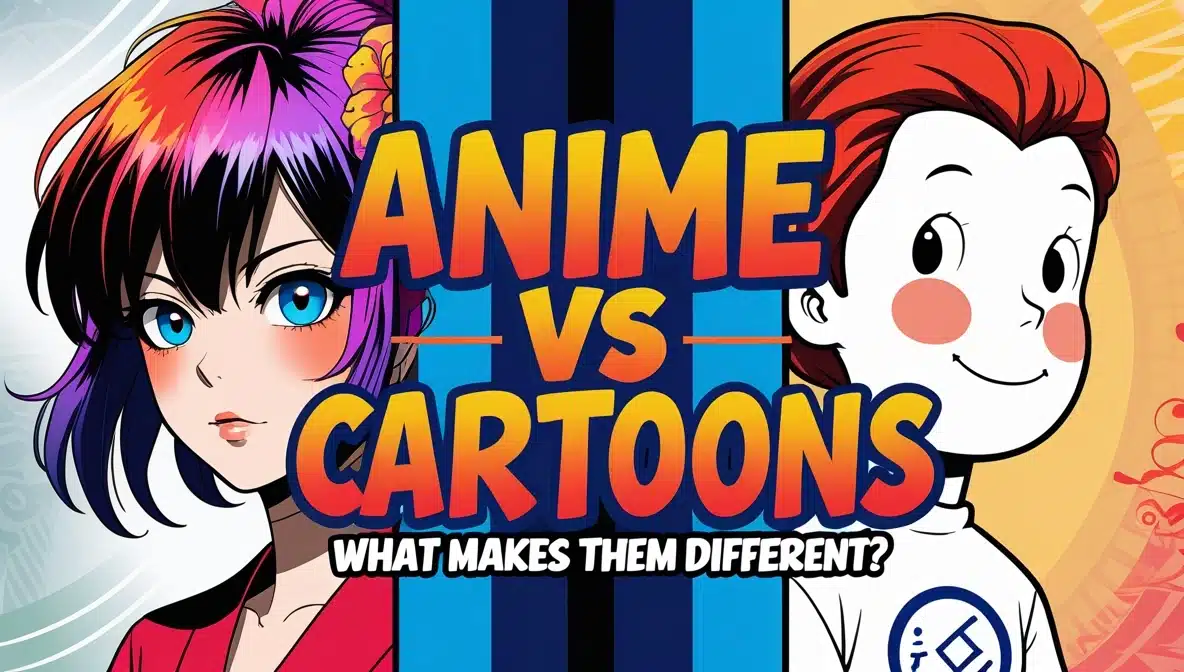
At its core, anime refers to animation influenced by Japanese style, whereas cartoons refer to animation produced anywhere in the world. While every anime is animation, not every animation qualifies as anime.
The Art Style
This is the most noticeable visual difference. Anime characters often have large expressive eyes, detailed hairstyles, and more realistic proportions. Backgrounds are frequently highly detailed, especially in films and popular series.
Unique features of anime art include:
- Large expressive eyes
- Detailed hairstyles
- Realistic proportions
- Detailed environments
- Selective animation emphasis
Cartoons typically use exaggerated movement and fluid animation. These styles serve different storytelling purposes. To understand how different anime platforms showcase these visual styles, you can explore anime platform comparisons and viewing guides.
Face Expressions: A Different Language Altogether for Each Culture.
It is truly amazing once you begin to notice the difference. The usage of signs to represent emotions in anime is a different language entirely from Western cartoons.
- Stress marks/vein bulge. For some reason, blood in the head/fist of an anime character has somehow made its self in to a ‘cross’ shaped line when someone is angry.
- Sweat drops. It is essentially the anime symbols for awkwardness/embarrassment/mild disgust.
- Nose bleeds. This is normally when the supposed to be male anime character is ‘nervous’ in the company of a pretty woman, the symbol derives from an ancient myth in Japan, which suggested that high blood pressure in males causes it to be visible through their nose.
- Face faults. The entire collapse of a body due to shock is often seen in anime comedy.
- The ‘akanbe’. Where someone pulls the lower eyelid down using their finger, and then wiggles the nose/mouth. This is an actual gesture made in Japan.
Western cartoons also has its own language and symbols; the stars around a character’s head when hit in the forehead; hearts floating out of people’s eyes; the steam around a character’s head when they are raging… The symbols in Western cartoons aren’t as culturally diverse. For a person who has never been exposed to anime, it will feel like you are out of the loop, and you will truly just have to familiarize yourself with what each of these symbols means.
The Biggest Difference No One Talks About-Storytelling:
This is where anime differs drastically. In terms of narrative, there are structural elements unique to both anime and most Western cartoons.
Most Western cartoons:
- Individual episodes, not linked chronologically, are resolved and reset.
- There is virtually no character development between seasons (or between episodes).
- The primary goal is entertainment within a tight time frame (10-22 minutes), usually intended for children.
- Plot holes and errors can frequently occur with little or no bearing on the story.
Anime:
- Individual stories can span hundreds of episodes.
- Characters age, experience loss, sorrow, defeat, and triumph as their narrative progresses and in individual plot lines.
- Most anime series adapt stories originally written in Japanese manga comics, providing built-in narrative complexity.
- Death is permanent. Losses have consequences. Tragedy is indelible.
Take a look at Fullmetal Alchemist: Brotherhood. The show deals with themes of war crimes, government corruption, and the morality of human sacrifice. Neon Genesis Evangelion is essentially a visual representation of psychological breakdown. They aren’t just simple, childhood cartoons presenting simple lessons in a child’s life; rather they are stories intended for people seeking a more emotional and meaningful experience.
Not that this means it is all doom, gore, or even shows just for adults, anime has Slice of Life series, which are quite silent and calm and suitable for everyone, but the essence of anime is that no matter what the genre is, it respects its audience. Anime presumes viewers will be able to keep up with the complexity of the story.
Cultural Roots: Why Origin Actually Matters
Anime is not just “animation made in Japan”. It contains the Japanese culture inside it in such a way that influences from the humor to the values the characters mention.
Some of the prevalent cultural elements in Anime include:
- References to Shintoism and Buddhist culture, which is mostly seen in the fantasy genre plots.
- Ganbaru (making it through anything) is the value of struggling hard, which is repeated across sports anime, school dramas, and action series.
- The highly elaborate school life since the school plays a huge role in Japanese society, and it has been given its due importance.
- Food that is so popular that there are entire anime shows devoted to cooking, and it is treated with extra care and love in even the action genres.
- The conflict between individuality and group loyalty is always prevalent in almost all anime.
These cultural influences shape the tone and pacing of anime. Understanding the broader evolution of Japanese animation is also explained in Japanese animation history and style overview.
Target audience: Cartoons are for kids, Anime is for everyone
This is perhaps the biggest misunderstanding regarding anime-animation = kids. This simply isn’t the case for anime in Japan. There is an entire classification system for anime based on audience age groups:
- Shonen-for teen boys (Naruto, Dragon Ball Z, One Piece)
- Shojo-for teen girls (Sailor Moon, Fruits Basket)
- Seinen-for adult men (Berserk, Vinland Saga, Ghost in the Shell)
- Josei-for adult women (Nana, Chihayafuru)
- Kodomomuke-for small children (Doraemon, Pokémon)
There is no corresponding classification system for Western animation, which is overwhelmingly either “family friendly” or “children” oriented (even though programs like The Simpsons and South Park are definitely “adult”). In Japan, anime is generally produced for adult viewing and is not viewed as immature or childish. This allows for far more diversity in the storytelling.
o stay updated on animation trends, AI creativity, and anime-related resources, you can also visit the Indranil Banerjee digital art and animation blog.
Style and Music
There is a high degree of significance placed on the music in anime. The songs for the openings and endings are works in themselves, and bands like Asian Kung-Fu Generation, Yoko Kanno, and Hiroyuki Sawano have made entire careers on anime openings and endings. An anime soundtrack like the one to Attack on Titan can be as richly scored and thematically developed as a film score. The music of cartoons tends to be a little simpler, a lot brighter, and can even border on comical. A cartoon soundtrack is more for setting emotion and controlling rhythm, not as a piece that stands on its own.
In animation terms, the works of large animation houses like Disney, Pixar, or modern Cartoon Network cartoons tend to move at more frames per second, giving them a more fluid animation than is typical of anime. Anime uses its varying frames, heavy still images, and unique design to make up for this deficiency; in this, it is successful, and many, or at least most, directed anime scenes feel more powerful than those of a smoother cartoon due to its composition.
How Anime and Cartoons Are Made Differently
Many focus on what these two things look like – the production pipeline, on the other hand, is nearly as interesting to look at. Whether it’s the duration of the episodes, release schedules, or source material, the production pipeline for anime is radically different from Western cartoons.
| Production Factor | Anime | Cartoons |
| Episode length | Typically 23–24 minutes | Varies widely: 7, 11, or 22 minutes |
| Release schedule | Weekly, one episode at a time (seasonal) | Often dropped in full seasons or batches |
| Source material | Usually adapted from manga, light novels, or visual novels | Often original or based on existing IP |
| Season structure | 12 or 24 episodes per cour/season | 10–26 episodes, sometimes renewed indefinitely |
| Animation frame rate | Lower frame rate, compensated by strong composition | Higher frame rate, smoother fluid motion |
| Studio model | One studio owns the production per title | Multiple studios or networks may co-produce |
| Music investment | Original soundtrack + dedicated OP/ED singles | Background score, theme songs less prominent |
| Dubbing culture | Originally subbed; dubbing added later for global release | Usually produced in English first |
Conclusion
Both fall under the broad term animation, sure, but they are far from one and the same, and by failing to recognize the differences between them, we lose what’s unique about each one. Anime has its own traditions of culture, of visual language, of certain kinds of storytelling, which always treat their audiences of any age with regard. Cartoons deal with accessibility and humor and broad appeal, both laudable (not lesser) traits.
The lesson isn’t that one is ‘better’ than the other. The lesson is that there are two separate traditions that have had decades to develop their respective vocabularies, and learning those vocabularies will only make us more discerning, better viewers. Re-watching anime like Spirited Away for the third time or re-showing Looney Tunes to a six-year-old are both engagements with separate traditions, and they should be treated as such.
FAQs
Q1: Are anime cartoons?
Technically, they are a type of animation, but they are so different culturally and stylistically that most anime fans believe they can be differentiated as individual art forms.
Q2: Why do characters have huge eyes?
This style dates back to Osamu Tezuka in the 1960s, who copied this element of the animation style from early Disney characters. This feature allowed the audience to differentiate easily between characters’ emotions.
Q3: Are cartoons made outside Japan, like anime?
Almost never. Only a few non-Japanese shows follow the anime style, and they are usually described as ‘anime-influenced’, although anything designated ‘anime’ will almost certainly have been made in Japan.
Q4: Are anime child-appropriate?
This completely depends upon the style of anime, as some, such as Pokémon and Doraemon, are child-friendly, while others, such as Elfen Lied and Berserk, should most definitely not be considered children’s animation. Check the age rating!
Q5: How are anime and cartoons different in popularity?
There are many reasons why anime has become more popular than cartoons today. One huge reason for this is that most people will favor a narrative that is composed of several episodes and arcs as opposed to a narrative that simply repeats the same pattern again and again, which a lot of cartoons seem to be guilty of. Additionally, anime are available in a variety of genres with varying appeal.