
Famous Abstract Art of Indranil Banerjee: Geometry & Emotion
The famous abstract art of Indranil Banerjee combines raw emotion with familiar form. This Indian artist has over 25 years of experience creating abstract paintings that feel both intense and relatable. He often says, ‘Art is not just what you see, but how you live.’ This motto shows that his creative vision goes beyond the canvas. Banerjee even patented a unique art theory that uses geometric shapes to make abstract figures recognizable. His unique method turns wild, abstract images into inspiring pieces of art that viewers can connect with. By definition, abstract art moves away from realistic depiction and focuses on shapes, colors, and feelings. Banerjee embraces this freedom while adding his own twist of familiarity.
The Passion Behind famous abstract art of Indranil Banerjee
He pours fearless energy into each canvas. His style is both visceral and cerebral, creating a dialogue between chaos and order. Every brushstroke carries intent and emotion. For Banerjee, painting is also a meditative journey of self-discovery and inner truth.
He once wrote, ‘My canvas isn’t just a surface; it’s where I battle.’ This raw mindset explains the fearless, chaotic energy in his work. He enjoys the mess of thick paint because it captures raw truth. He aims for his art to jolt viewers awake. Rather than comfort, his paintings challenge and energize those who see them.
Abstract artists often fall into two groups. Some focus on precise, recognizable elements even in abstraction (the ‘straight painters’). Others prioritize deeper meanings and concepts (the ‘philosophical painters’). Uniquely, Banerjee bridges both approaches. His paintings contain identifiable forms and layers of symbolic meaning. This dual quality lets him speak to a broad audience, from casual viewers to thoughtful art lovers.
Innovative Theory Shaping famous abstract art of Indranil Banerjee
Abstract art can sometimes feel distant or hard to grasp for viewers. Banerjee’s technique closes that gap by keeping something familiar within the abstraction. People can emotionally connect with his paintings rather than feel alienated by them.
He has innovated a theory of “recognizable abstraction” that keeps his art relatable. This unique approach even reframes what is abstract art. It makes each painting a personal abstract art definition for him and his audience. By arranging abstract shapes in familiar layouts, he makes sure viewers see hints of real forms. If he paints an abstract face, the ‘eyes’ and ‘mouth’ still appear where a face would have them. Each shape may be distorted, but the overall pattern feels familiar. He even secured a patent for this unique method.
His approach echoes principles of Gestalt psychology, which explain this human tendency to seek patterns and shapes. He taps into our natural pattern recognition. The human brain loves to find familiar shapes, even in chaos. A simple circle might suggest an eye or the sun. A triangle might stand in for a nose or a mountain. In one piece, a hut with a pointed roof and windows mimics a human face. The roof resembles hair. The windows act as eyes, and the door stands in as a nose. These clever echoes of reality make his wildest scenes feel approachable and meaningful. It offers clear forms to draw viewers in, yet leaves room for deep interpretation.
Banerjee loves to watch viewers pause and puzzle over his canvases. At first, the swirls of color might seem confusing. Then someone spots a familiar outline: a face, an animal, or a symbol hidden in the chaos. In that moment of recognition, the art becomes a personal experience for the viewer. These touches of recognizability also create emotional resonance. Viewers often associate the shapes with their own memories and feelings. Many find themselves moved by Banerjee’s paintings because they see something of their own life or imagination reflected back. Though his work is mostly on canvas, the idea of relatable abstraction could influence sculpture or digital art as well. It opens new possibilities for artists in those fields.
Signature Works from the famous abstract art of Indranil Banerjee
Banerjee’s portfolio features many compelling works. May Day (2023) was inspired by a real aviation tragedy. It captures the heart-wrenching final moments before a plane crash, echoing the pilot’s desperate last words. Anguished faces and fragments of wreckage appear across the canvas, starkly reminding viewers how fragile life can be. It is often cited as one of his best artwork.
Fractured Agony (2024)
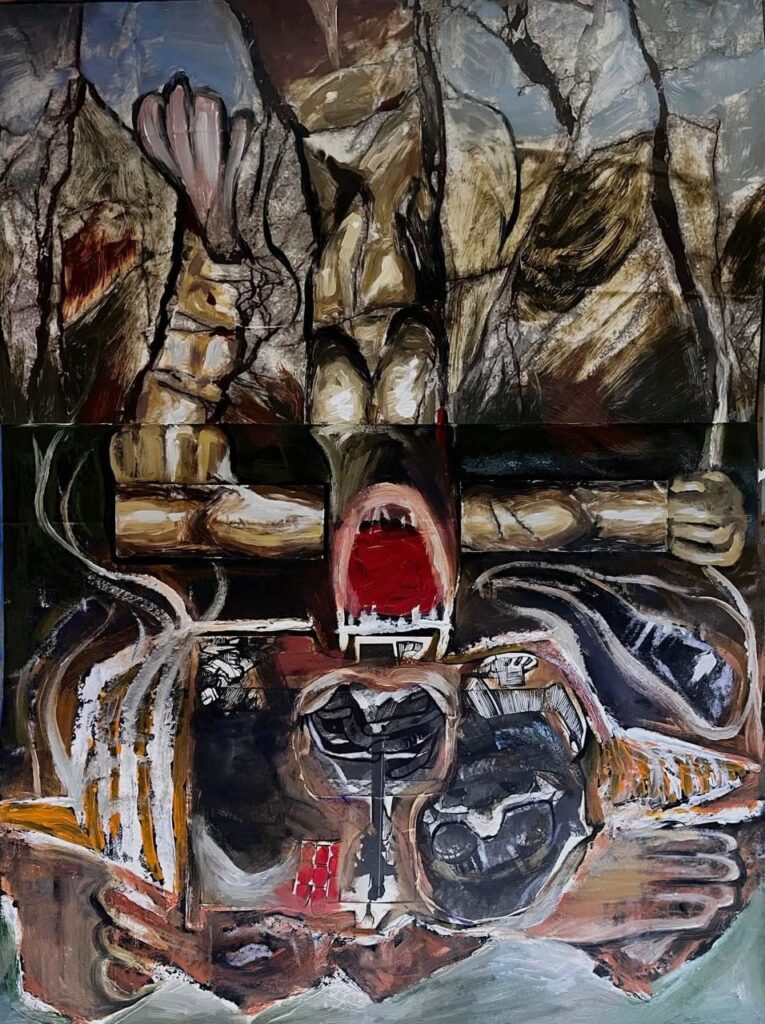
is another famous painting by Banerjee. It uses jagged strokes of red and black to visualize deep human pain. In this piece, a distorted face seems to emerge, silently screaming amid the chaos.
In contrast, Divine Serenity and Transformation
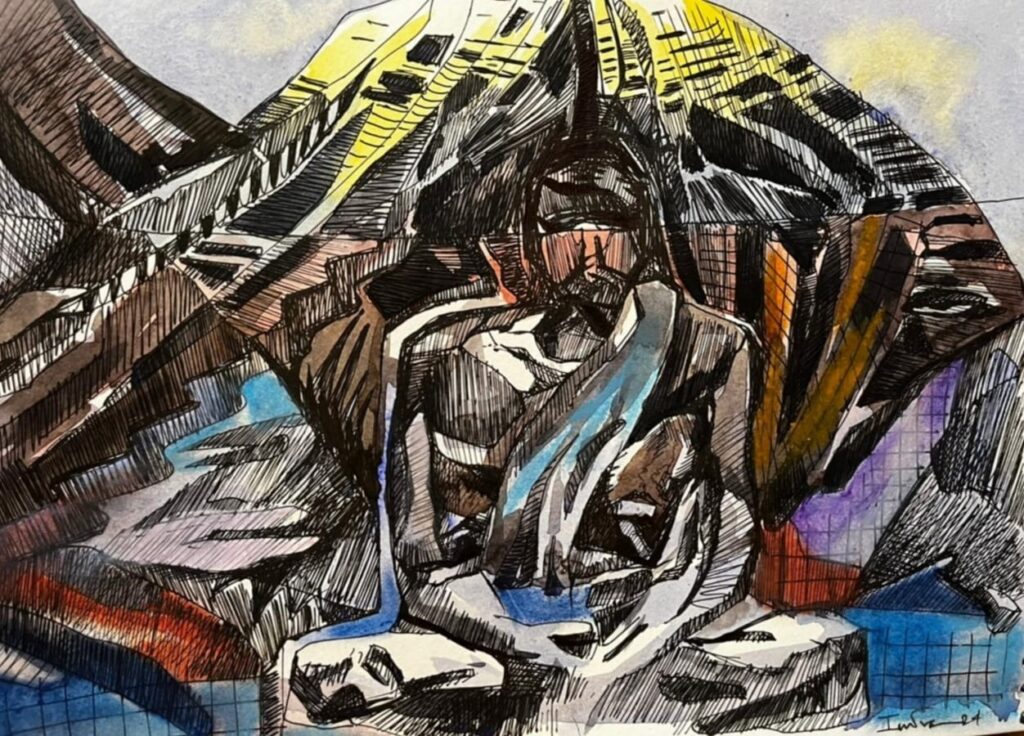
explores a calm, meditative mood, capturing an ethereal moment of change.
But In Space The Sun Is White
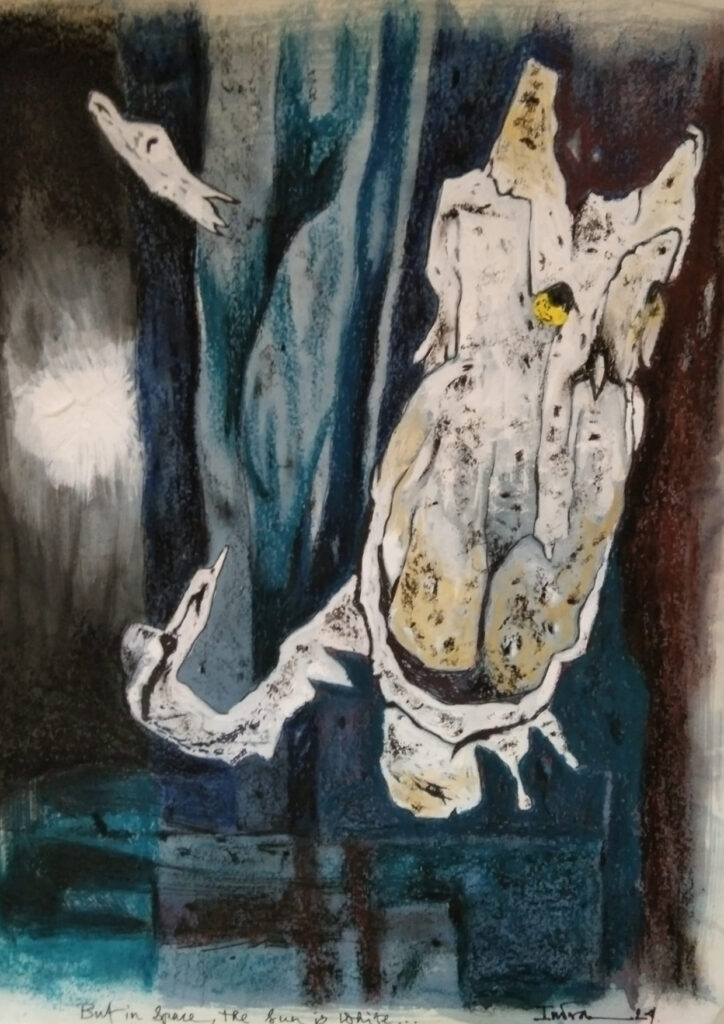
shows a surreal encounter between an owl and a snake. They meet beneath a stark white star, showcasing the cosmic scope of Banerjee’s imagination.
Notably, Banerjee’s titles are often poetic phrases. They hint at each painting’s story and make the meaning more accessible.
What does the art say?
He believes an artist is more than any one style. To stay free, he constantly evolves his approach. This restless innovation means no two periods of his art look alike. For instance, his early paintings used bold earthy tones and simple geometric motifs. Later works explored more narrative, surreal scenes. This constant evolution keeps his art fresh and surprising. He blends bold global abstraction with the narrative richness of his Indian heritage, giving his art a unique character. He has even dubbed his evolving vision Modern abstract art by Indranil Banerjee, marking it as his own movement. Banerjee is notably the only artist in Asia with a published patent in art theory. This achievement highlights his dedication to pushing the boundaries of art and making it more accessible. For many, the famous abstract art of Indranil Banerjee stands apart for its originality and emotional power. It contains some of the most unique art of our time, proving that abstraction can be both personal and universal. Banerjee’s journey shows that abstract art can evolve while staying meaningful to everyone. His paintings stand as a testament to the power of art to connect people across boundaries.