Indranil Banerjee and the Language of Abstract Perception
Indranil Banerjee and the Practice of Abstract Perception
Indranil Banerjee works in art as a process of sustained observation and reflection. Painting has shaped how he understands experience, form, and structure. Over time, this practice evolved into a distinct abstract language rooted in perception rather than representation.
This blog traces the artistic journey of Indranil Banerjee, focusing on the development of his abstract approach, his engagement with material and process, and the conceptual framework that guides his work today.
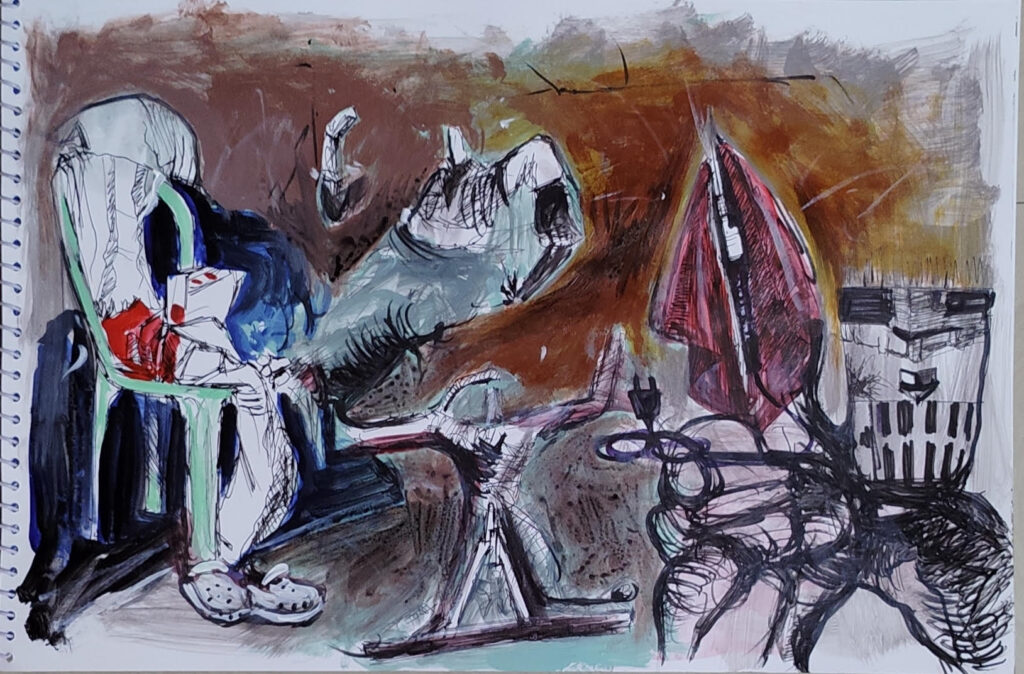
(Paperwork)
Early Visual Conditioning and Urban Influence
Indranil Banerjee grew up in Kolkata, a city marked by density, movement, and layered histories. Streets carry constant motion. Walls record time through erosion, repair, and repetition. Light shifts through dust and structures. These everyday conditions formed his earliest visual vocabulary.
From a young age, drawing became a habitual activity. Sketching served as a way to observe relationships between form, space, and surface. Rather than producing finished images, early drawings focused on understanding structure. This habit developed attentiveness.
Urban textures played a significant role. Cracked pavements, peeling surfaces, oil stains, and water residue offered visual complexity. Such surfaces suggested that meaning often appears through accumulation rather than clarity. Over time, Indranil Banerjee began noticing recognizable forms emerging within irregular patterns. Faces, figures, and spatial cues appeared without deliberate intention. This perceptual tendency later informed his abstract compositions.
Formal Training and Structural Foundation
Formal art education introduced discipline and technical understanding. Training emphasized proportion, color interaction, and material control. These fundamentals provided a strong structural base. Knowledge of classical techniques enabled informed decision-making during later experimentation.
At the same time, strict accuracy felt insufficient. Precision addressed surface appearance but did not fully express internal experience. During this period, private sketchbooks became important. Drawings made between classes recorded experimentation without external expectation. These sketches functioned as a visual journal.
Looking back, this phase marked the transition from technical learning to personal inquiry. The sketchbooks reflected an early effort to move beyond representation and toward abstraction.
Developing an Independent Artistic Voice
After completing formal studies, Indranil Banerjee focused on developing an independent direction. Painting gradually shifted from presentation to investigation. The canvas became a space for inquiry rather than illustration.
This approach rejected decorative expectations. Painting was not used to narrate stories or convey messages. Instead, it examined states of perception. Each work functioned as a site where memory, emotion, and structure intersected.
Early exhibition experiences provided practical insight. Some works found audiences. Others returned unsold. Over time, these outcomes clarified priorities. Painting remained guided by inner necessity rather than external validation. This understanding shaped long-term consistency.
Process-Based Painting as Methodology
The studio environment plays a central role in Indranil Banerjee’s practice. Painting often occurs after extended workdays. Fatigue gives way to focus once engagement with the canvas begins.
Each painting begins without a fixed plan. The first mark establishes direction. Subsequent layers respond to material behavior and visual feedback. Decision-making emerges through interaction rather than preconception.
This process aligns with a system-based approach. Paint, surface, tool, and gesture interact continuously. Time becomes visible through layering and revision. The image evolves gradually.
Such methodology treats painting as an active process. The canvas operates as both recording surface and responsive field.
Chaos, Structure, and Recognizable Abstraction
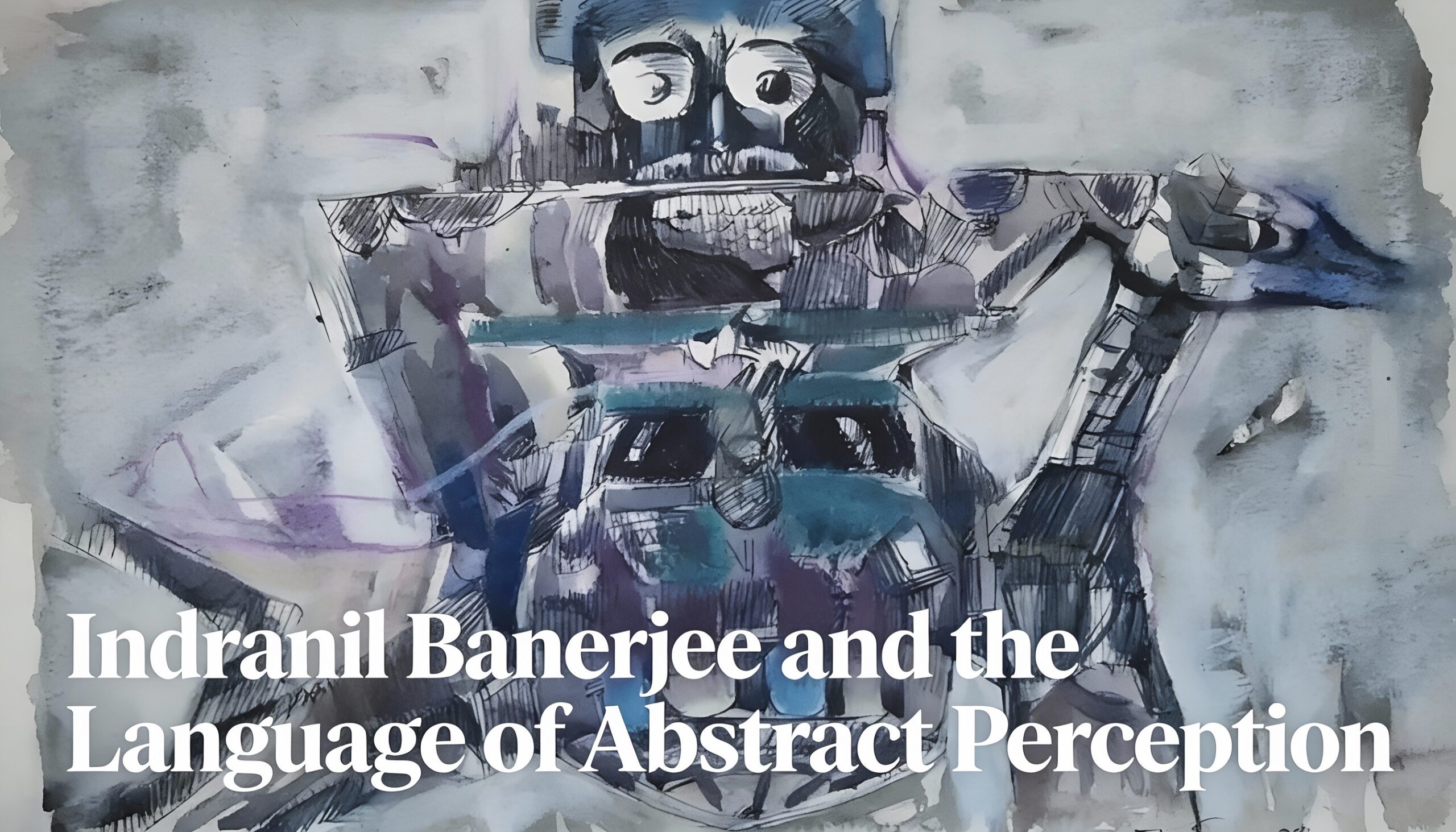
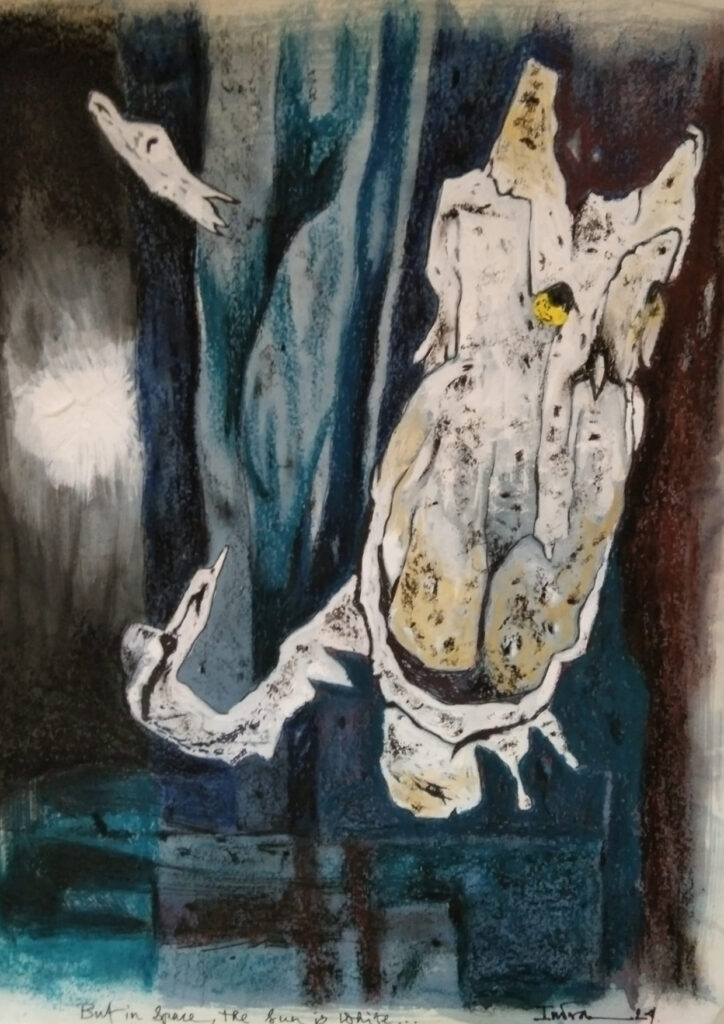
A defining characteristic of Indranil Banerjee’s work lies in the balance between disorder and structure. Abstract energy exists alongside deliberate placement. Backgrounds may appear turbulent, yet compositional decisions remain intentional.
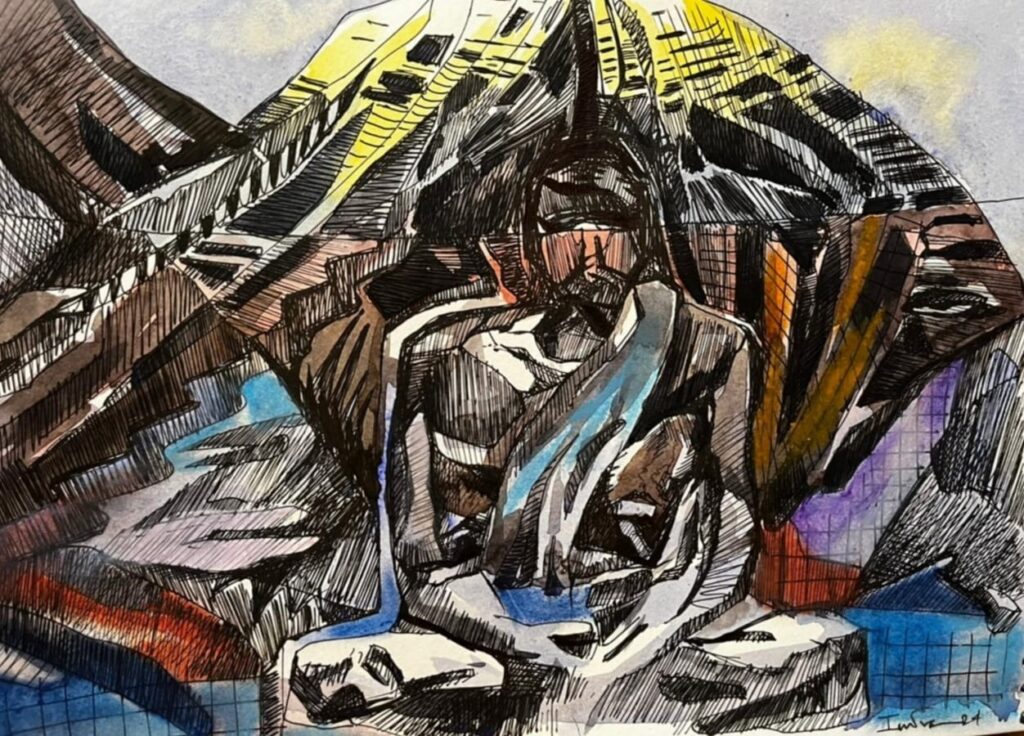
Geometry plays a guiding role. Circles, axes, fragmented faces, and architectural references appear within abstract fields. These elements provide orientation. Viewers encounter points of recognition without fixed interpretation.
This approach developed into a conceptual framework often described as recognizable abstraction. The objective centers on relatability. Recognition operates subtly. Meaning remains open-ended.
Viewers often experience gradual discovery. Extended observation reveals relationships between forms. This unfolding process forms an essential part of engagement.
Material Awareness and Surface Intelligence
Material interaction forms a core aspect of the practice. Paint layers accumulate through scraping, rebuilding, and reapplication. The surface records physical engagement.
Texture functions structurally rather than decoratively. Variations in thickness reflect pressure, resistance, and timing. The surface becomes an archive of decisions.
Tools vary according to need. Brushes, knives, rags, and hands offer different responses. Each tool alters control and unpredictability. Painting engages both body and mind.
Color selection follows emotional necessity. Contrast arises naturally through internal response. Reds, blacks, golds, and muted greys appear frequently. Each color interacts differently with form and texture.
Despite visible intensity, each stroke serves intent. Disorder receives guidance. Structure emerges gradually.
Cultural Lineage and Artistic Continuity
Although the work operates within abstraction, it remains informed by tradition. Indian art history, folk practices, and craft methodologies influence material thinking and process orientation.
Traditional practices emphasize patience, repetition, and collective knowledge. These values align with process-based abstraction. Modern painting retains continuity with historical approaches.
Collaborations with traditional artisans reinforced these principles. Engagement with ancient techniques highlighted the importance of labor, time, and shared expertise. These experiences influenced studio practice.
Motifs inspired by folk traditions occasionally appear within abstract compositions. Such elements integrate heritage into contemporary form without direct quotation.
Resisting Stylistic Fixity
Indranil Banerjee maintains a commitment to evolution. Fixed style limits inquiry. Repetition without challenge reduces growth.
Different bodies of work explore varying states. Some series emphasize restraint and structure. Others prioritize raw gesture and density. Variation remains intentional.
Consistency emerges through intent rather than appearance. Authenticity guides decision-making across phases. This approach supports long-term development.
Writing, Teaching, and Conceptual Frameworks
Writing complements visual practice. It provides structure for articulating ideas related to perception, abstraction, and process. Language clarifies method.
Teaching follows naturally. Instruction emphasizes dialogue rather than authority. Learning remains reciprocal.
Technology intersects with visual inquiry. Systems thinking informs abstraction. Interdisciplinary engagement broadens context while maintaining focus on human experience.
Ongoing Practice and Inquiry
Today, Indranil Banerjee continues working across painting, visual theory, and interdisciplinary projects. Each area informs the others.
The core inquiry remains consistent. How do form, perception, and emotion interact? How does material record experience? How does abstraction remain relatable?
Failure and revision contribute to clarity. Persistence sustains practice.
Conclusion: A Continuing Artistic Path
Indranil Banerjee represents a practice shaped by observation, experimentation, and reflection. Years of testing and rebuilding inform current work.
Art remains an ongoing process. Each canvas continues inquiry. One form leads to another.
For Indranil Banerjee, abstraction functions as a language of perception. The practice remains open. The journey continues.